Classification of Sprinkler Irrigation System
From Gardens to Grand Fields; Master the Art of Uniform Water Distribution.
HHossein Jalalian
· 20 min read· 108 views
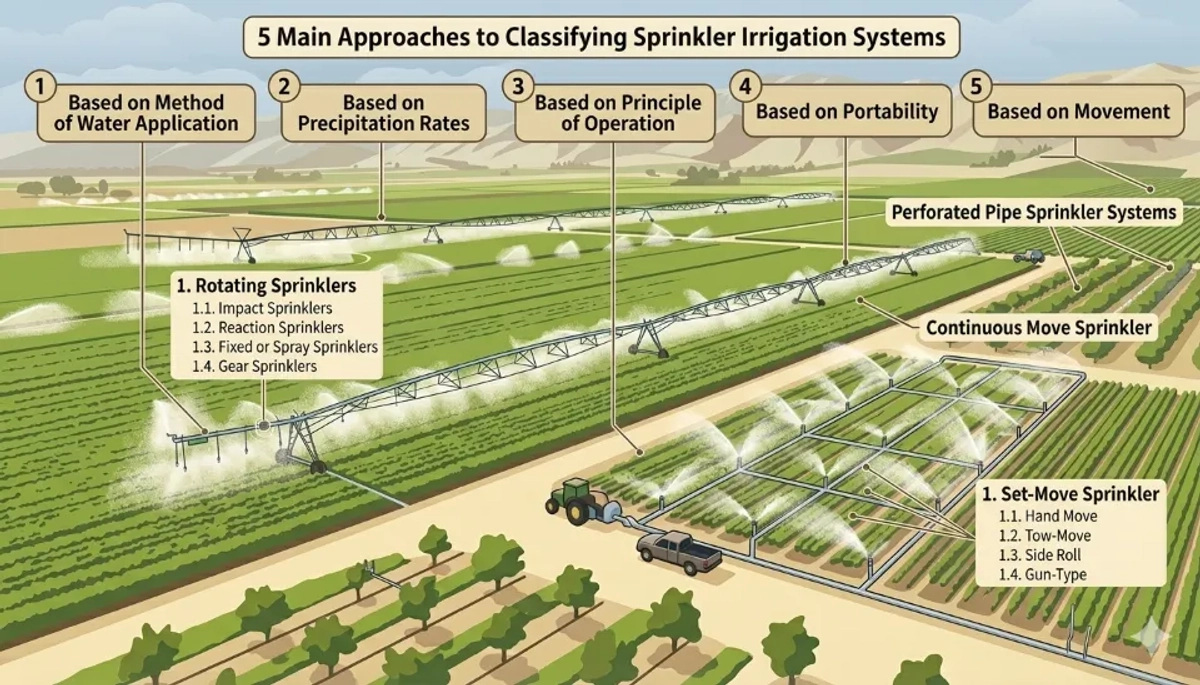
From Gardens to Grand Fields; Master the Art of Uniform Water Distribution.
Quick answers to common questions.
What percentage of water do you think is wasted by conventional irrigation methods? Most of the world's irrigated agriculture relies on surface irrigation, which has the lowest water use efficiency (30–35%). The water use efficiency of novel methods (drip, sprinkler, etc.) is significantly higher (50–90%) (ISO, 2017). Irrigation is the process of applying water to the soil to meet the water needs of crops and plants. The development of irrigation systems, such as drip or sprinkler irrigation, has a positive impact on the efficiency of water application. Sprinklers have evolved to be able to apply larger drops, be better distributed along with the land, and operate at low pressures (Rocha et al., 2023). Compared to conventional technologies, sprinkler irrigation technology has several advantages, including greater capacity to apply smaller quantities of water more frequently at a local level (Thorp, 2019). This system can adapt to most soil types and different topographies, as well as being flexible in design and operation. This method of irrigation results in more than 50.0% water savings compared to surface irrigation (Matter et al., 2022) and is easy to install in agricultural fields. Sprinkler irrigation is used for a wide variety of plants, including field crops, vegetables, orchards, etc. Sprinkler systems can also be installed for applying wastewater, protecting plants from frost, and controlling dust in animal operations (Bjorneberg, 2013).
For deeper insights into “Irrigation Systems” explore the full article.
For deeper insights into “Drip Irrigation System in Agriculture” explore the full article.
In general, there are two main categories of sprinkler system classification: (1) conventional systems, including permanent fixed, temporary fixed, semi-fixed, and portable; and (2) mechanised systems, including linear systems, rolling lateral, centre pivot, self-propelled, and direct assembly (Testezlaf, 2017).
This article discusses the classification of sprinkler irrigation systems based on different aspects of the sprinkler.
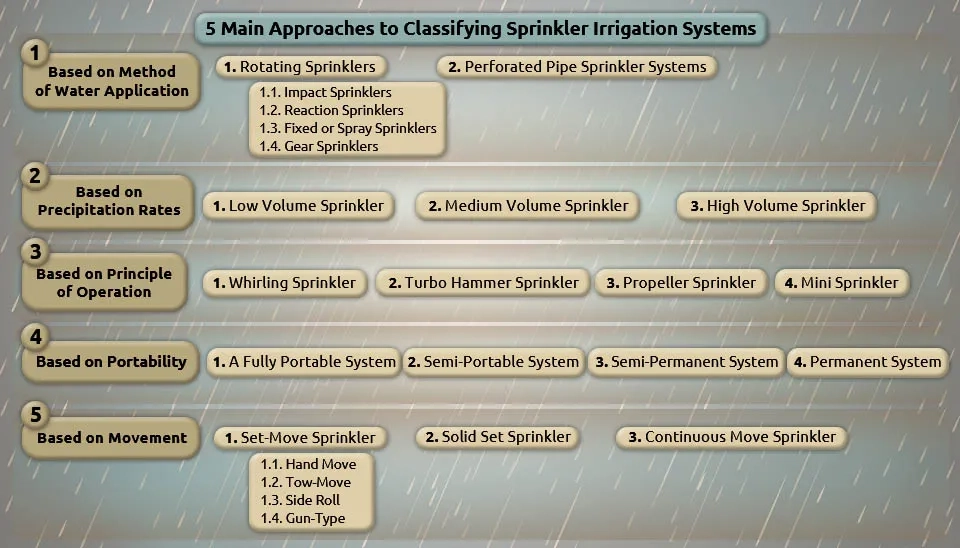
Table. Classification of sprinkler irrigation system
Classification of sprinkler irrigation system | ||||
Based on method of water application | Based on portability | Based on precipitation rates | Based on principle of operation | Based on movement |
1. Rotating Sprinklers 1.1. Impact Sprinklers 1.2. Reaction Sprinklers 1.3. Fixed or Spray Sprinklers 1.4. Gear Sprinklers 2. Perforated Pipe Sprinkler Systems | 1. A fully portable system 2. Semi-portable system 3. Semi-permanent system 4. Permanent system | 1. Low Volume Sprinkler 2. Medium Volume Sprinkler 3. High Volume Sprinkler | 1. Whirling sprinkler 2. Turbo hammer-sprinkler 3. Propeller sprinkler 4. Mini-sprinkler | 1. Set-move Sprinkler 1.1. Hand move 1.2. Tow-move 1.3. Side Roll 1.4. Gun-type 2. Solid Set Sprinkler 3. Continuous Move Sprinkler |
Rotating or perforated pipe sprinklers are available in a wide range of sizes and cover relatively large areas. It is the most common type used in agriculture. Different types of rotating sprinklers, based on the method of water application, are classified as follows:
A rotating sprinkler is a common type used in agriculture. These sprinklers are available in a wide range of sizes and cover relatively large areas. Different types of rotating sprinklers based on the method of water application are classified as follows (Shankar et al., 2018):
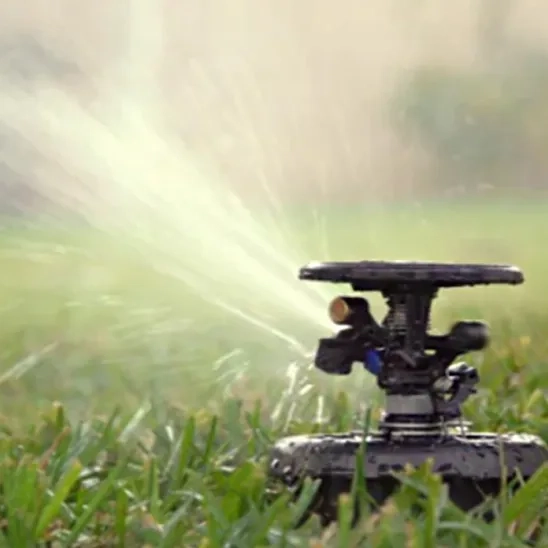
Impact type sprinklers have one or more nozzles that discharge jets of water into the air. A constant diameter nozzle made of brass or plastic is the most common type of nozzle used with the impact sprinkler. This type is suitable for large areas.
Reaction type sprinklers are typically rotated by the torque produced by the reaction of water leaving the sprinkler. This type is not suitable for irrigating large areas as compared to an impact or gear driven sprinkler.
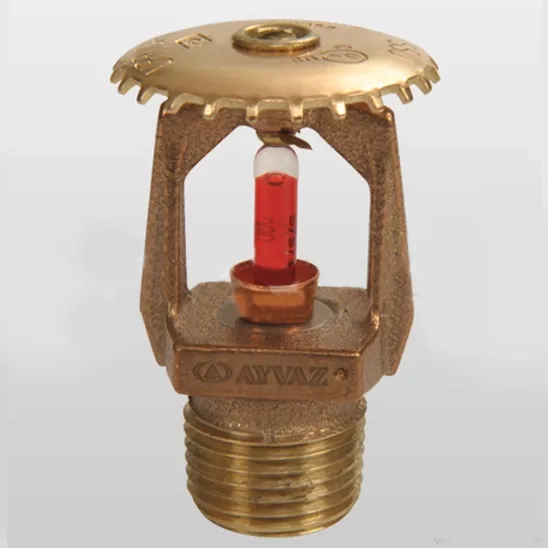
Fixed head type sprinklers are somehow similar to the microjets that spray water in an umbrella shape. Many-fixed nozzle sprinklers can produce small droplets.
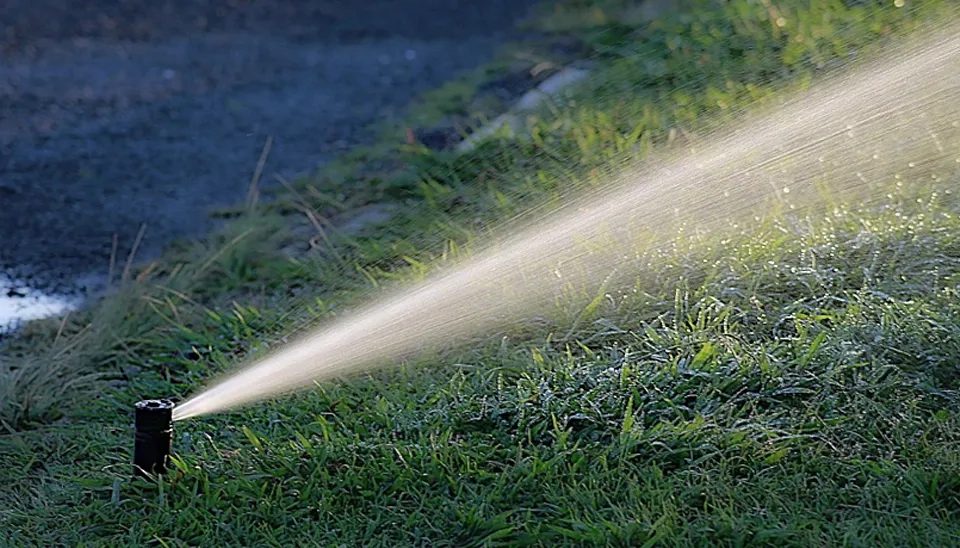
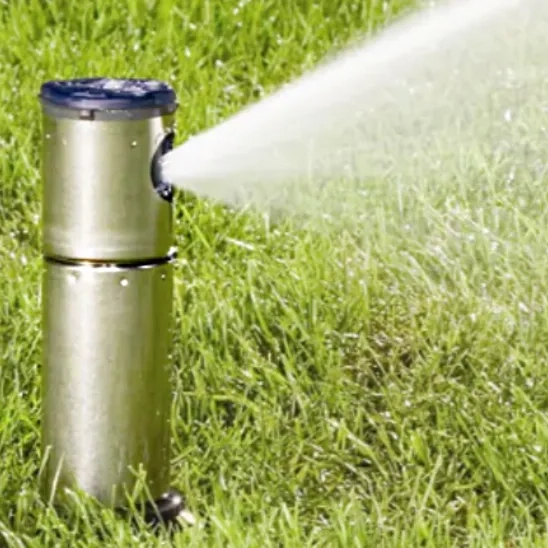
Sometimes rotating sprinklers are driven by small water turbines located in the base of the sprinkler, which are called gear driven sprinklers. This type of sprinkler is suitable for large areas and can rotate smoothly.
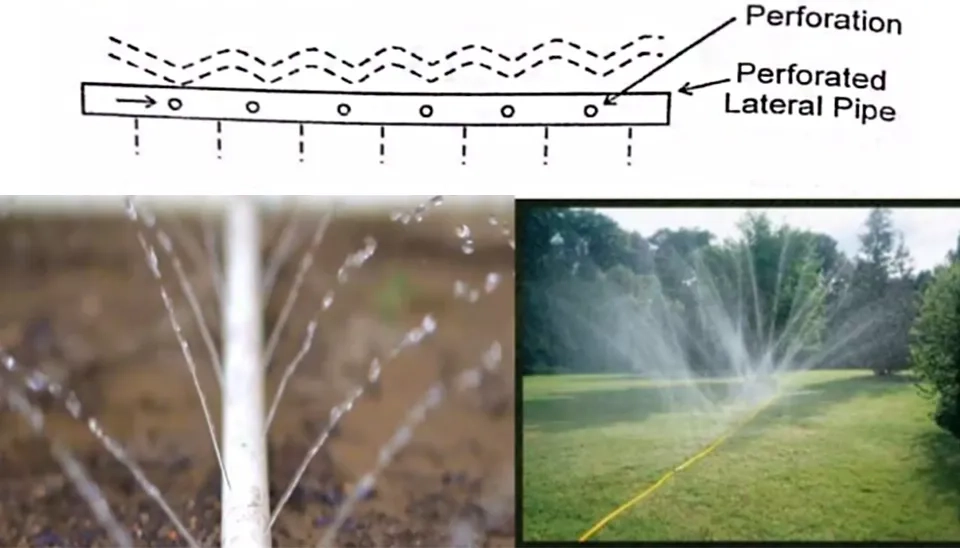
A perforated pipe sprinkler system consists of drilled holes in a portable lateral that can distribute the water at a uniform rate. This system is suitable for lawns, gardens, and small vegetables, and it is also suitable for soils that have moderately higher infiltration rates.
The portability of sprinkler irrigation technology can be divided into four main types, depending upon the movement of lateral, mainline, submain, and pumping units. These four types are (Shankar et al., 2018):
In this type, the entire sprinkler system can be moved from one place to another. This system includes a portable pumping and filtration unit as well as the main line and laterals, which are made of aluminium. So it can be shifted from one place to another due to the water source. In this type of sprinkler, the labour cost is much higher than the initial investment.
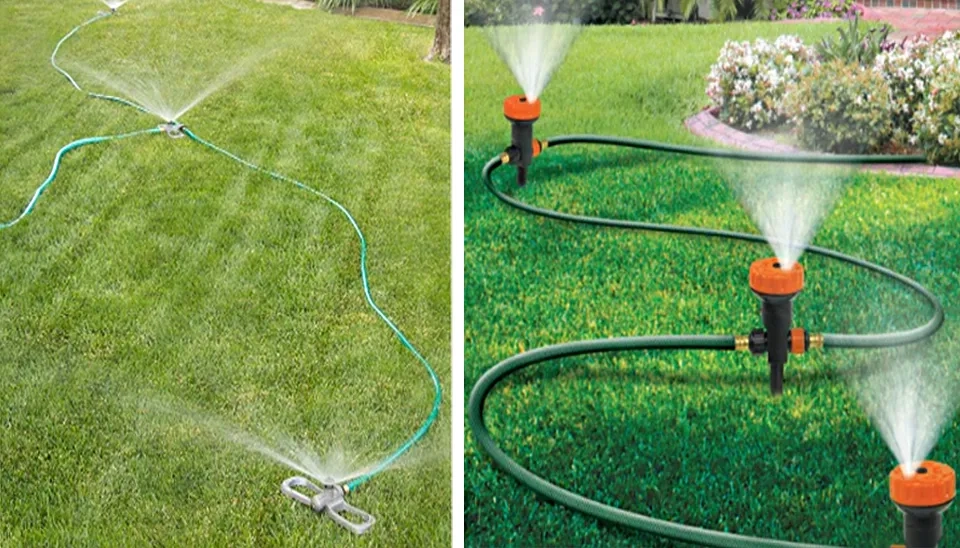
For further details about the portable sprinkler systems and to buy the product, click here.
It is somehow similar to the fully portable system. But in this type of sprinkler, the filtration and pumping units are fixed near the water source. It can be used in different areas; however, it cannot be used on more than one farm when there is only one pumping plant. In this type of sprinkler, the labour cost is comparatively less than the initial investment.
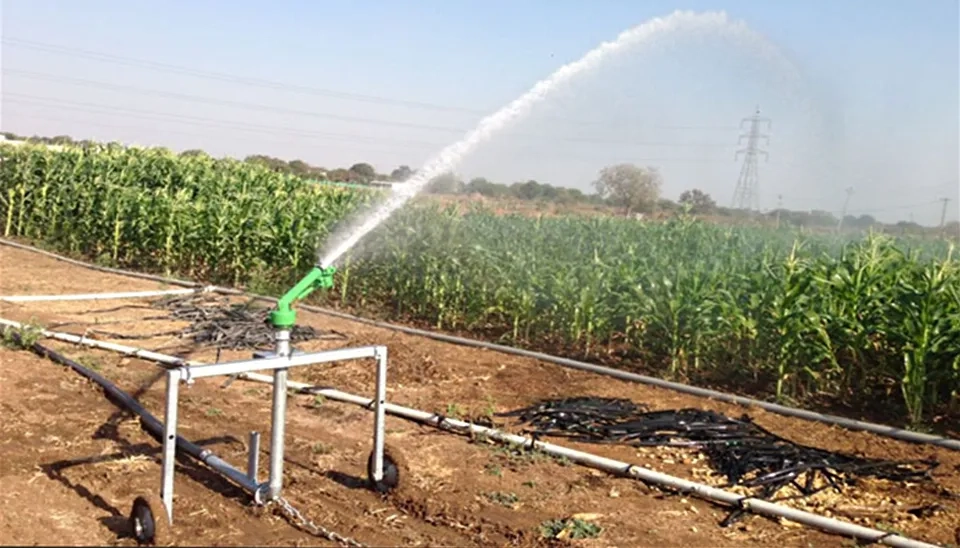
This sprinkler system consists of a mainline, a sublime, a pumping plant, and a filtration unit with a permanent water source. In this type, only the laterals and sprinkler heads can be moved. The mainline and sublines are mostly buried below the plough depth to prevent interference with cultivation practices.
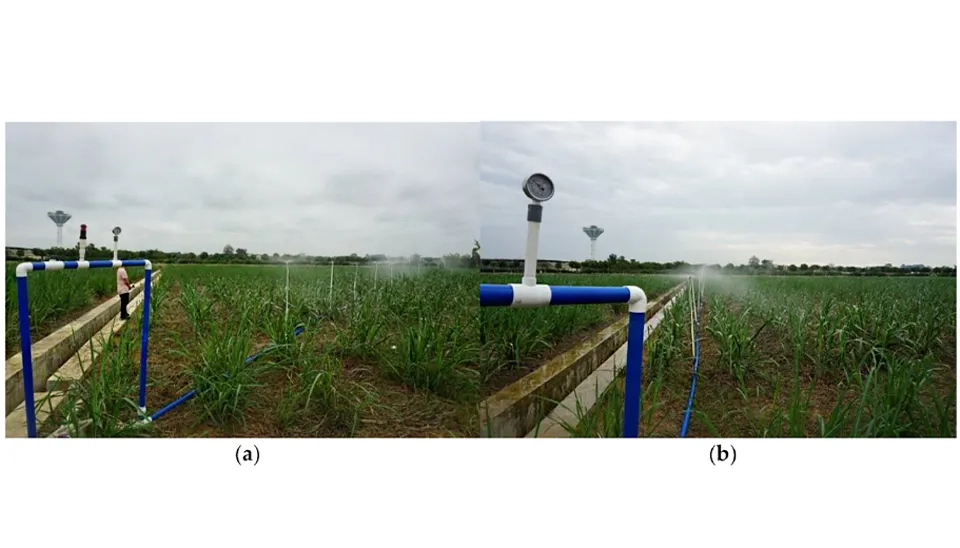
The whole system is costly and permanent, including the filtration unit, laterals, mainline, and pumping plant. In these sprinklers, the laterals, mainlines, and sublines are buried in the ground at about 60-90 cm depth to avoid interference with cultivation practices. The sprinkler head is also located on the riser pipes.
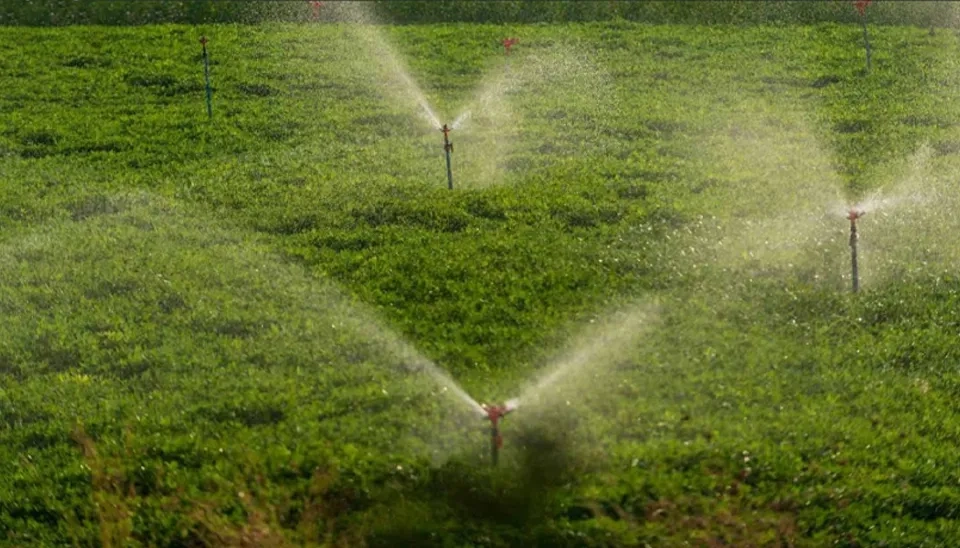
For further details about the Permanent sprinkler systems and to buy the product, click here.
The average precipitation rate of all sprinklers in an area is referred to as the precipitation rate for a sprinkler system. Irrigation Sprinkler Classification due to the precipitation rate are: low, medium, and high-pressure sprinklers. The characteristics of the system components, together with the operating pressure of a sprinkler, determine the flow rate, the degree of spraying of the drops, and the intensity of precipitation provided by the system (Shankar et al., 2018; Rocha et al., 2023).
Although rotary sprinklers working under low pressure are not very common, they are widely used in agriculture and are suitable for uneven terrain and sloping farmlands (Zhang et al., 2019). The low-pressure rotary sprinkler is designed to be applied in fixed sprinklers, and if the structure is designed properly, it can achieve a high-quality water application. In a low volume sprinkler, the precipitation rate will be less than 13 mm/hr (Chen et al., 2020).
To see low volume sprinkler products, click here.
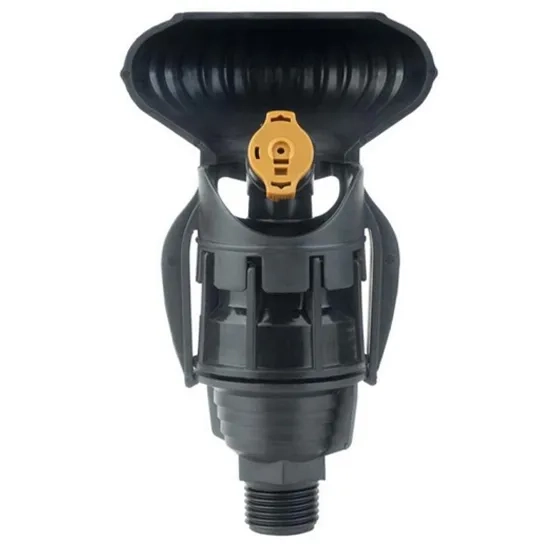
In most conventional sprinkler irrigation systems, medium pressure sprinklers are used. One or two nozzles (with 4 and 7 mm diameters) are installed in these sprinklers. According to Robles et al. (2017), at mean pressure, the water jet breaks enough to form an adequate pattern of conical water distribution. In medium volume sprinkler systems, the relationship between irrigation uniformity and wind speed is stronger. In a medium volume sprinkler, the precipitation rate will be between 13 and 25 mm/hr.
To see medium volume sprinklers, click here.
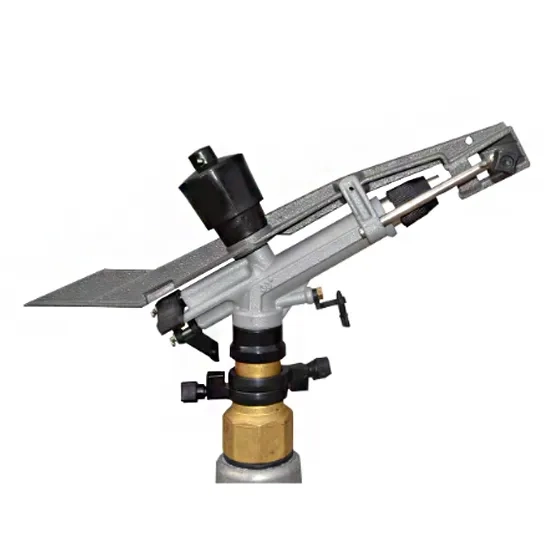
High volume sprinklers can be widely used for the irrigation of sugarcane, corn, etc. (Testezlaf, 2017). Compared to low-pressure sprinklers, high-pressure sprinklers have a wider wetting diameter, and therefore, the applied water will spread over a wide area. In a high volume sprinkler, the precipitation rate will be more than 25 mm/hr.
To see high volume sprinklers, click here.
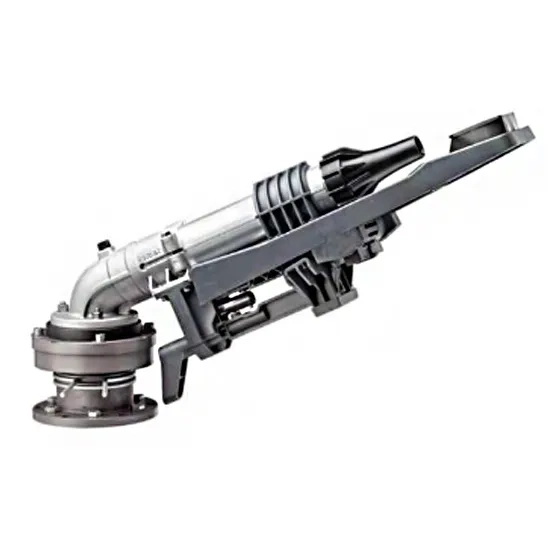
Most sprinklers, particularly those used for field crops, can be classified into four groups based on the operation mechanism (Shankar et al., 2018).
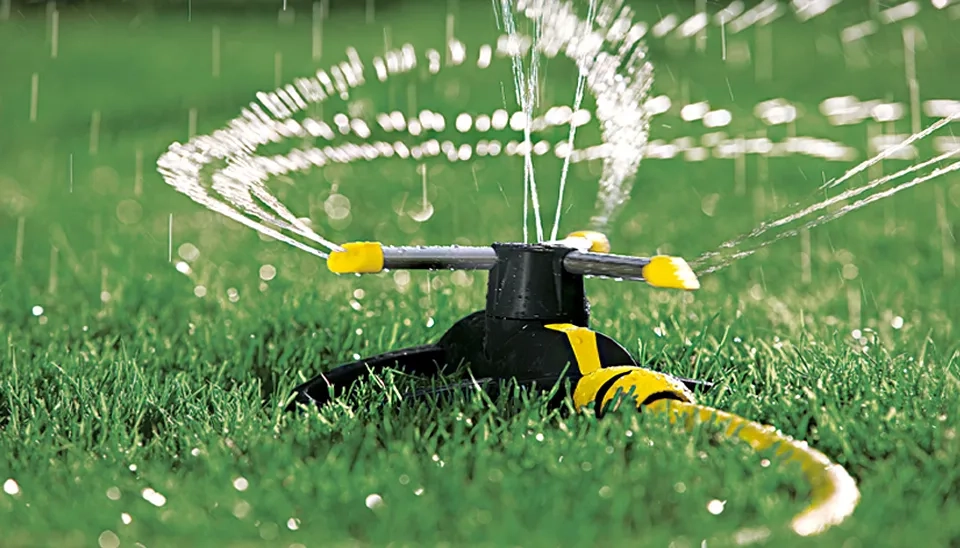
In this type, the water jet releases from the end of the arm, which results in a rotary movement occurring at high speed in a reverse direction. It is easy to operate and does not need much pressure. The whirling sprinkler has a small diameter and is usually used to irrigate gardens and orchards.
To buy a whirling sprinkler, click here.
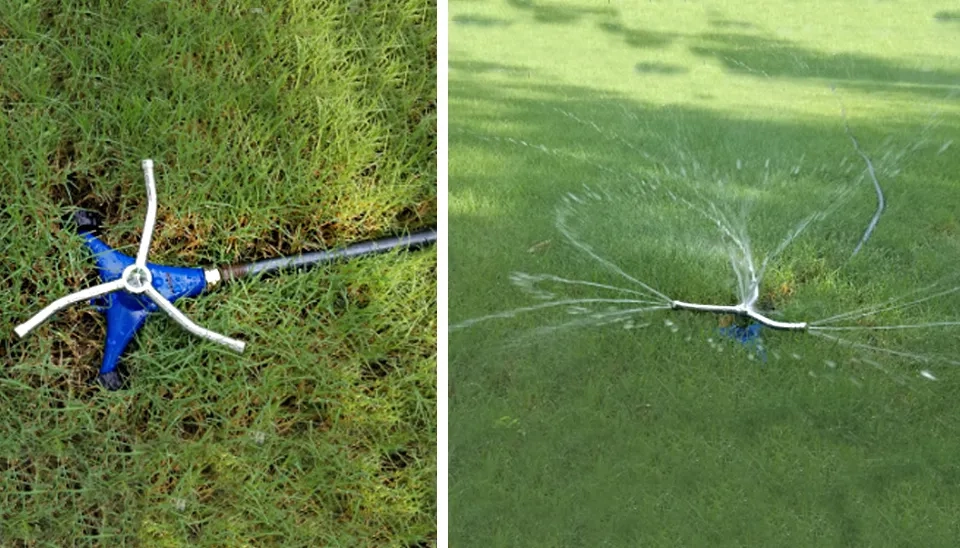
In this type, the water jet operates a wheel and activates the hammer. This action turns the sprinkler on. It is made of plastic material and is mostly used for garden and orchard irrigation.
To buy a Turbo hammer-sprinkler, click here.
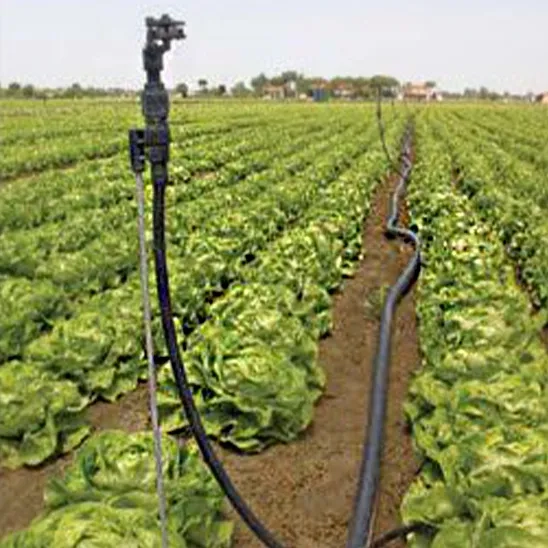
In this type, the water jet strikes the propeller, which is rotated at a high speed around its shaft. This action results in a circular motion of the sprinkler. It is made of plastic material and needs a few components to be manufactured. The propeller sprinkler is used for irrigating field crops.
To buy a propeller sprinkler, click here.
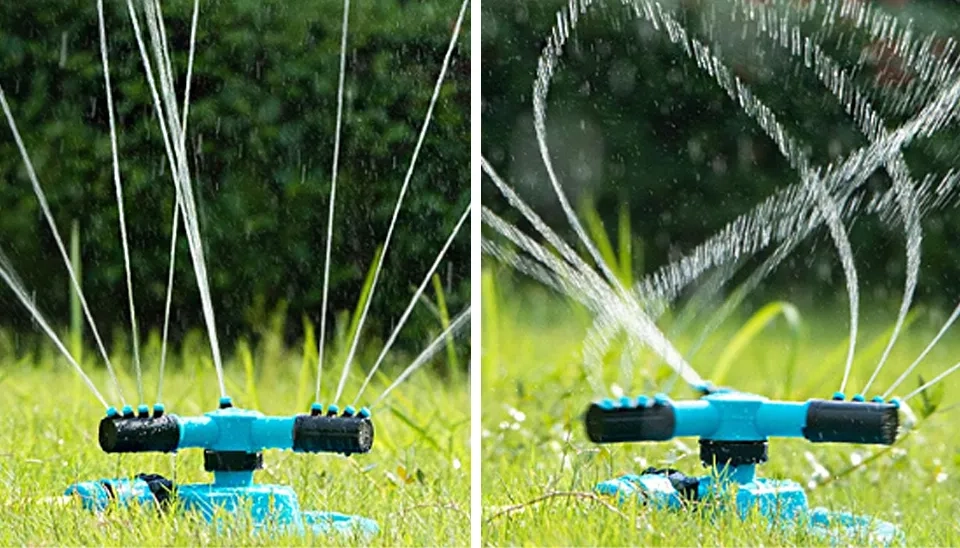
In this type, the water jet strikes a bearing, which processes one or two channels. This action rapidly rotates the mini sprinklers and distributes water. It is made of plastic materials and is usually used for irrigating orchards and gardens. It gives a low discharge at an operating pressure of about 1.5 to 2.0 kg/cm².
To buy a Mini-sprinkler, click here.
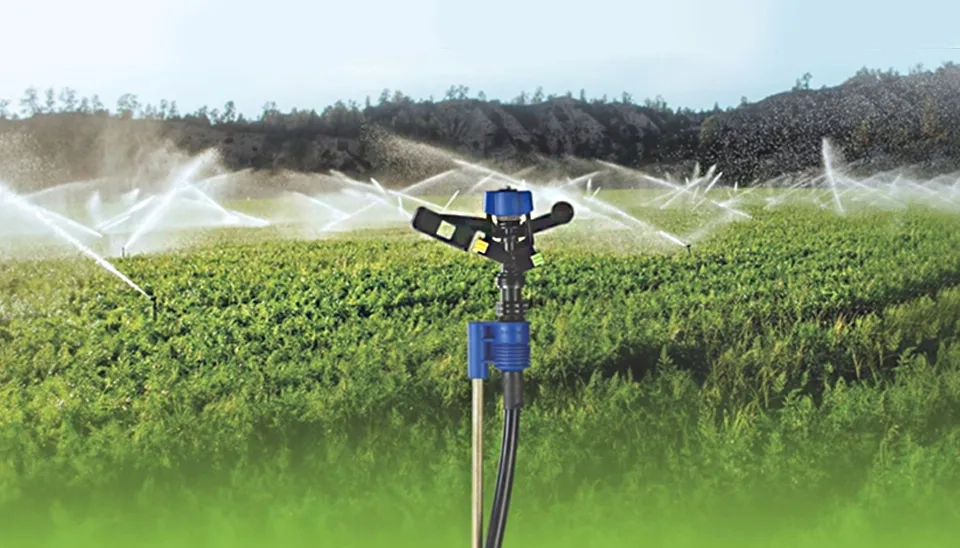
The sprinkler system classification based on the movement can be divided into three main groups. These groups are discussed in the following (Shankar et al., 2018; Bjorneberg, 2013).
Set-move sprinkler irrigation systems are designed to slowly apply water during the irrigation set in 8 to 24 hours. It is possible to move this system from one position to another mechanically or by using a hand. As long as the water is applied, the set move system remains stationary. When the system is shut off, the sprinkler laterals are drained, and they will be shifted to the next set position. This mechanism will be repeated until the entire field is irrigated.
This system can be moved to the next set position by picking up and carrying the lateral pipes by hand. The hand movement systems are mostly made of aluminium and have a diameter of 50 to 150 mm. This type of sprinkler can also be classified as a fully portable system based on its portability.
To view the hand move sprinkler products, click here.
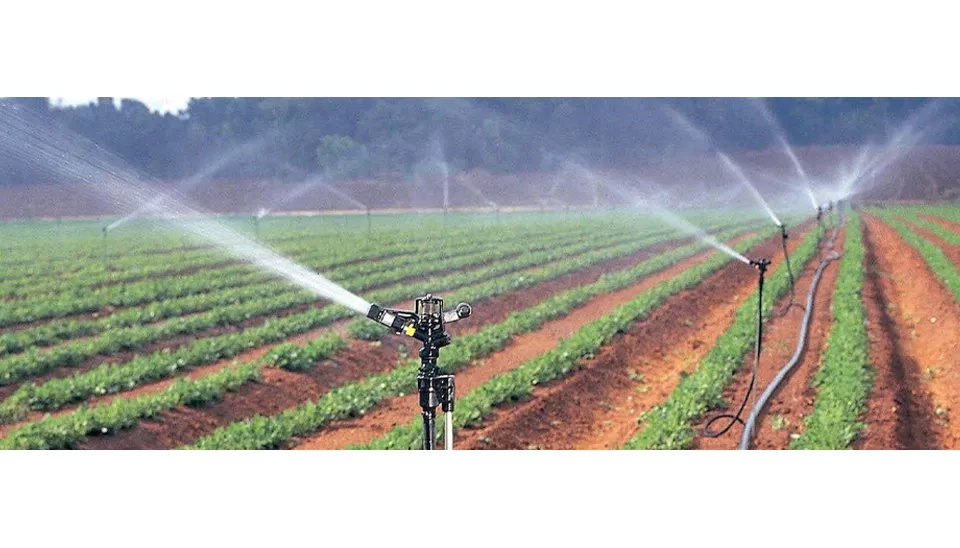
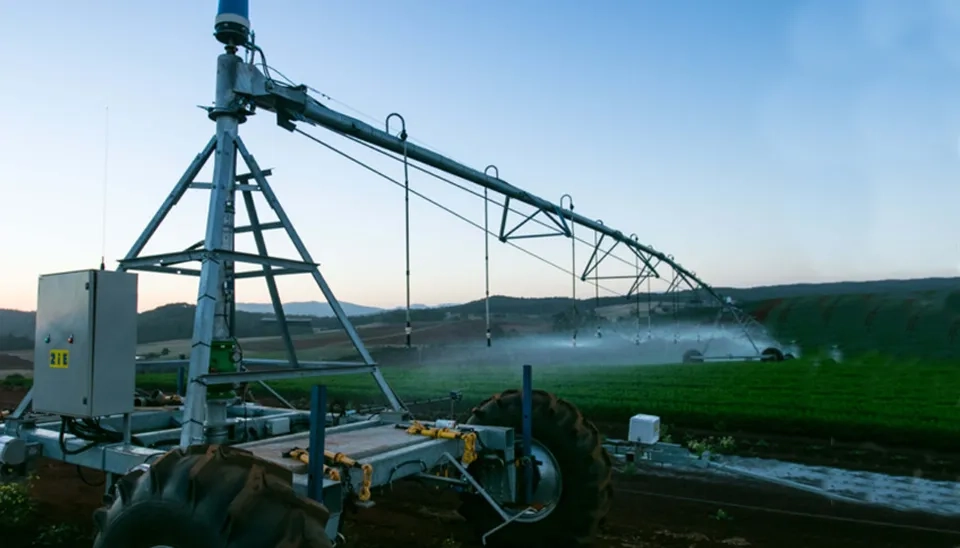
This system is the least expensive type of sprinkler. In this type, each section of tow-move laterals has wheels that facilitate the movement of the laterals to the next set position. However, this type is not widely used since moving the laterals is tedious and needs careful attention. This system may also damage the crops.
To view the Tow-move systems, click here.
Fig. 20. Tow-move sprinkler system
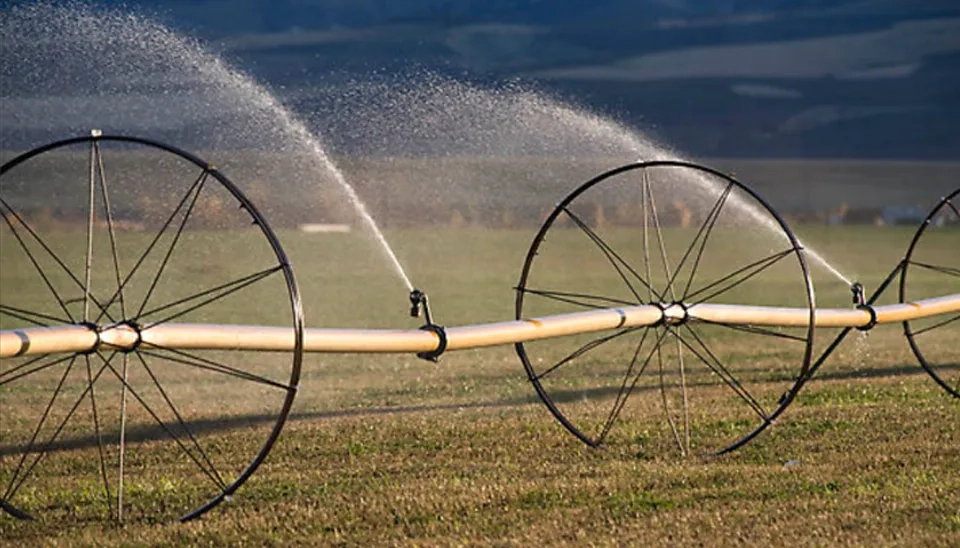
This system is one of the most popular types of set-move irrigation systems. In this type, there are wheels on each section of pipe in the lateral role, and the pipe is the axle of the wheel. When an irrigation set is completed and the pipe has drained, the wheel line can be rolled to the next position.
If you want to buy side role irrigation systems, click here to see the products.
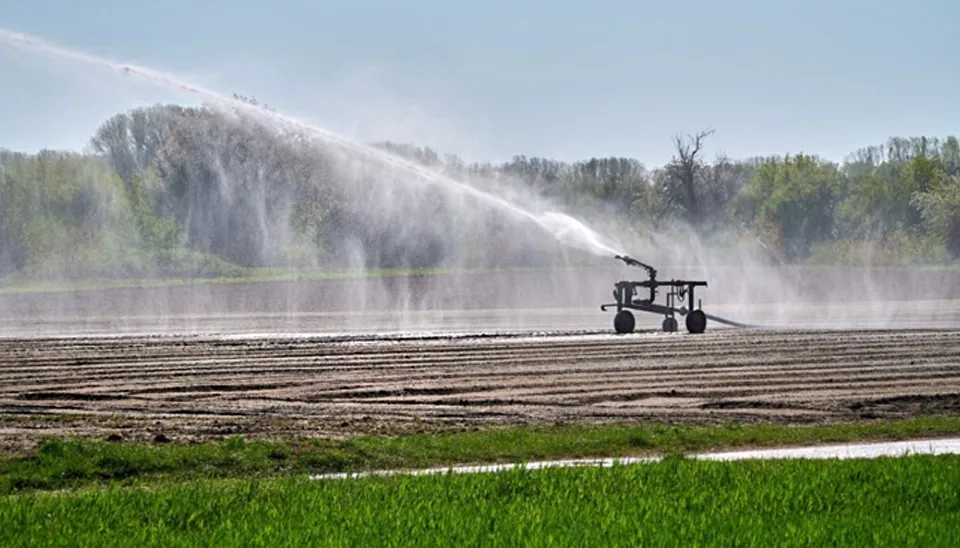
This type of sprinkler is known as a giant sprinkler. It is a set-move irrigation system consisting of a large volume sprinkler that is mounted on a wheeled car or trailer. It can be moved from set to set with a tractor or by hand. This system can be used for wastewater disposal. The gun-type sprinklers can be applied to soils with high infiltration rates; they cover a large diameter (180 m) and have a very large capacity of up to 78 lit/sec. However, this system is not suitable in regions that have a high wind velocity.
If you want to buy gun-type irrigation systems, click here to see the products.
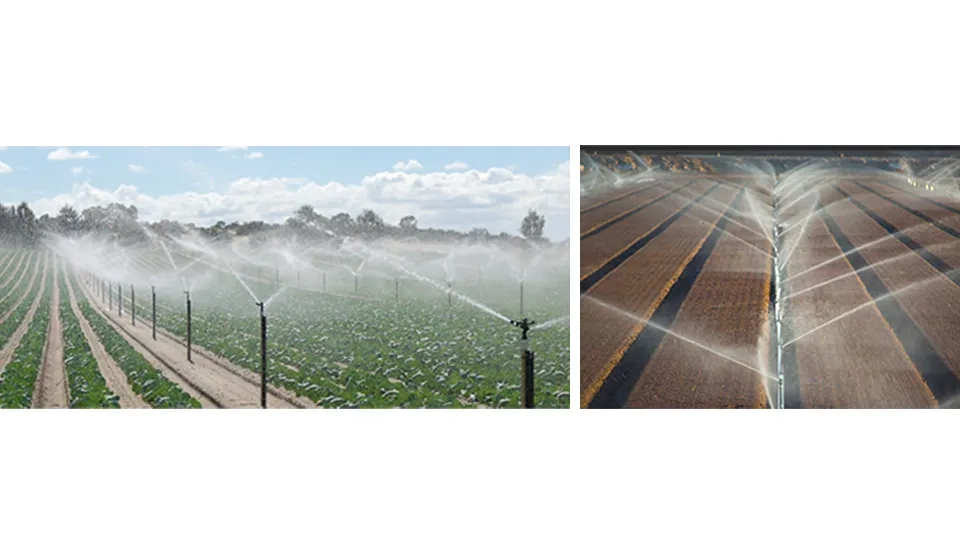
This irrigation system has sufficient laterals and sprinkler heads and can irrigate the entire field simultaneously. The laterals will be installed on the ground early in the crop season and will remain for the entire season. This system is mainly used for crops and plants that need short and frequent irrigation every 1 to 5 days. Solid-set systems have high application uniformity if they are properly designed (Bjorneberg, 2013).
To see solid set system products, click here.
The continuous move systems consist of laterals and sprinklers that connect to the mainline and move constantly as water is supplied. In areas where labour costs are high and there is also a labour shortage for moving laterals and sprinklers from one place to another, these irrigation systems are commonly used. There are three types of continuous move systems: (1) centre-pivot sprinkler systems; (2) traveller sprinkler systems (reel irrigators); and (3) linear-move sprinkler systems.
To buy continuous move systems due to your demand and see the products, click here.
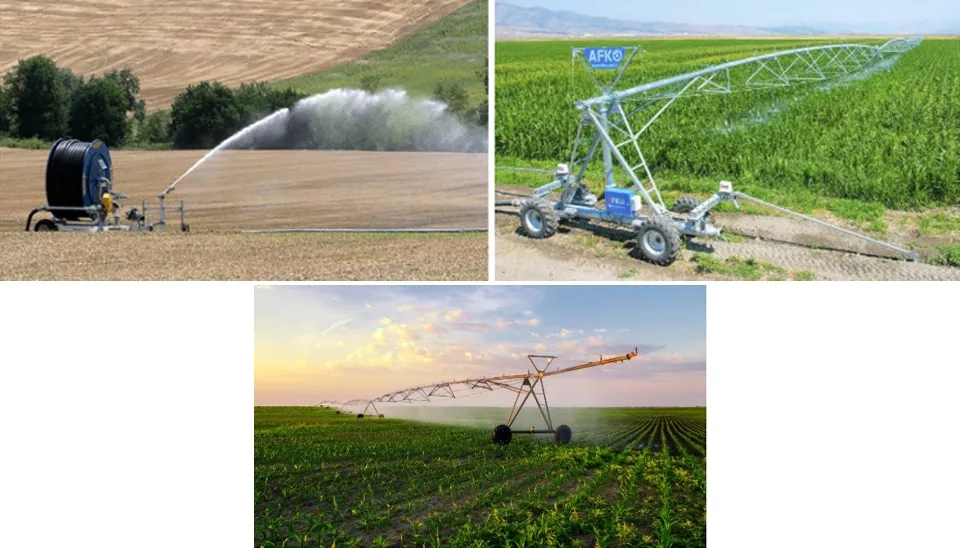
Sprinkler irrigation systems are known as one of the most popular methods for irrigating agricultural lands. By using fixed or moving sprinkler irrigation systems, water will be sprayed on the soil and plants. A number of factors, including the soil or crop type, wind speed, operation costs, infrastructure availability, etc., affect the efficiency of the irrigation system, and these factors should be taken into account when choosing a sprinkler irrigation technology. Therefore, considering different classifications of sprinkler irrigation systems and choosing a proper system will maximise application efficiency, minimise costs, reduce energy consumption, and increase productivity.
Keep reading




Comments
No comments yet
Be the first to comment
Share your thoughts and start the conversation.