IoT Based Smart Water Management Systems: Applications, Benefits and Challenges
It is estimated that water transmission pipes lose between 20% and 30% of the water that flows through them, with losses exceeding 50% in older systems due to leaks, metering issues, public use, etc.
It is estimated that water transmission pipes lose between 20% and 30% of the water that flows through them, with losses exceeding 50% in older systems due to leaks, metering issues, public use, etc. (Gopinath et al. 2022).
The increase in population raises human demand, and overuse of water for domestic, agricultural, commercial, and industrial purposes, combined with climate change and pollution, is affecting the sustainability of the environment (Getu and Attia, 2016). Smart water management systems can assist water utilities and users in better managing and conserving water resources and ensuring sustainable water supply by utilizing advanced technologies (Palermo et al., 2022). This novel technology uses the Internet of Things (IoT), which creates creative solutions for effective water usage, as water shortage has become a more urgent concern in recent decades (Robles et al. 2014). This article will examine the idea of IoT-based smart water systems, their advantages, challenges, and particular application scenarios.
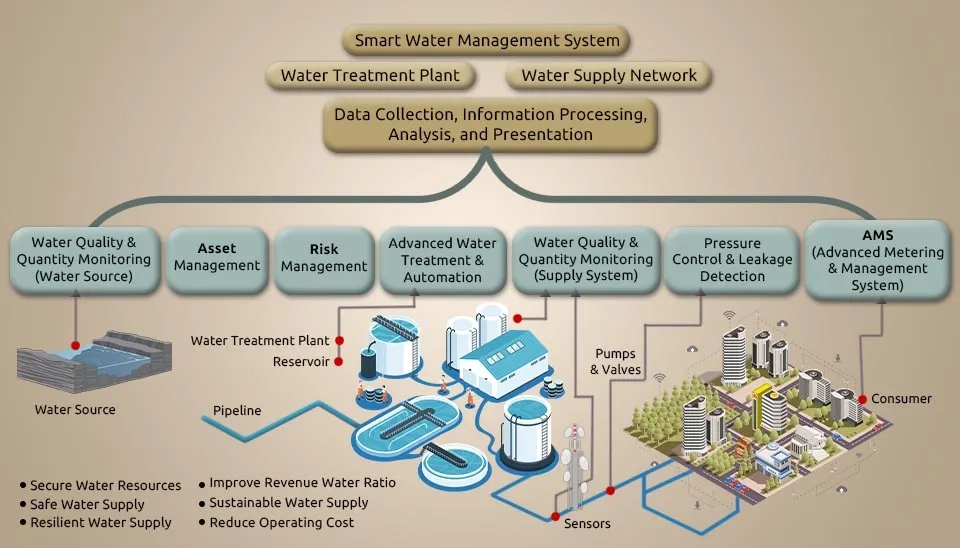
Fig. 1. IoT Based Smart Water Management System architecture
Table 1. Comparative Analysis: Traditional vs. IoT-Based Smart Water Management Systems
Aspect
Traditional
IoT-Based
Advantages
Manual monitoring
Simple tools
No need for advanced infrastructure
Real-time alerts for leaks and overuse
Remote control of valves and pumps
Energy and cost savings
Higher productivity
Challenges
Time-consuming data collection
Delayed response to issues
High setup costs
Requires technical expertise
Infrastructure compatibility issues
Data management and security concerns
Applications
Domestic and agricultural use
Traditional irrigation
Smart irrigation
Smart gardening
Wastewater treatment
Leakage detection
Aquaculture monitoring
Water quality monitoring
1. What is a Smart Water System? Architecture and Components
The conventional methods of analyzing the water quality require much time and labor. So there is a need to monitor and protect the water with a real-time water monitoring and management system. Smart water systems use smart components, like sensors, controllers, and data centers, to achieve real-time monitoring, transmission, and control of water systems for decision-makers. It is a more cost-effective and sustainable solution and enables real-time monitoring of hydraulic data, automatic monitoring, and alerts from the Cloud platform in case of events such as water leakage or overuse. Smart water management systems are mainly used to remotely control valves and pumps and can measure pressure, flow, and consumption (Gonçalves et al., 2020; Mohd Ismail et al., 2019; Pacheco et al., 2017). A smart water system can lead to more sustainable water services, reducing financial losses and enabling innovative business models to serve the urban and rural population better (Hellström et al., 2000; Ramos et al., 2020).
The smart technologies have helped in developing efficient methods to solve many serious issues in real-time, such as the cost of deployment, power usage, maintenance, privacy and security, complexity, etc. The Internet of Things (IoT) has received substantial attention in the water management sector for its ability to reduce water wastage through higher energy efficiency, low-cost operation, faster processing, and advanced intelligence (Adedeji et al., 2019; Palermo et al., 2022).
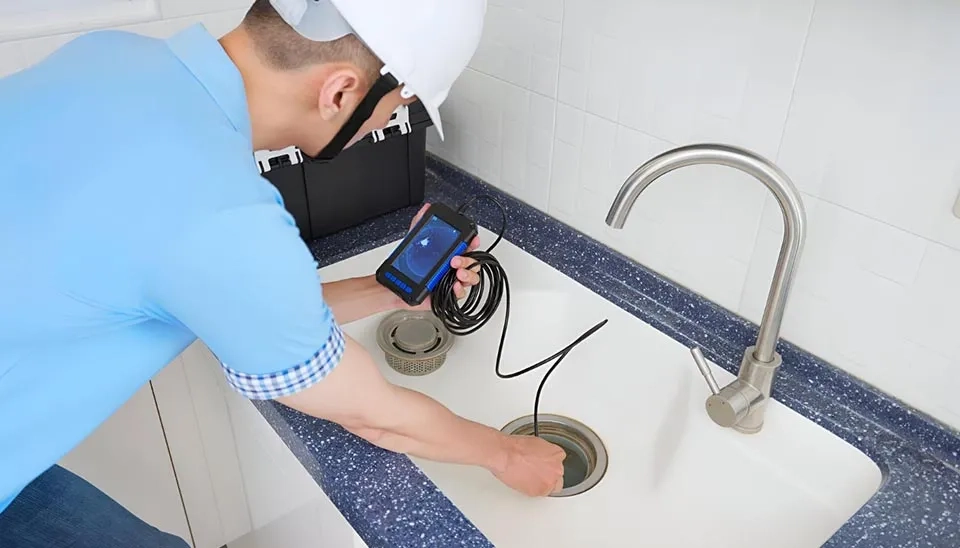
Fig. 2. Smart water monitoring system for leakage detection.
2. The Role of the Internet of Things (IoT) in Smart Water Management
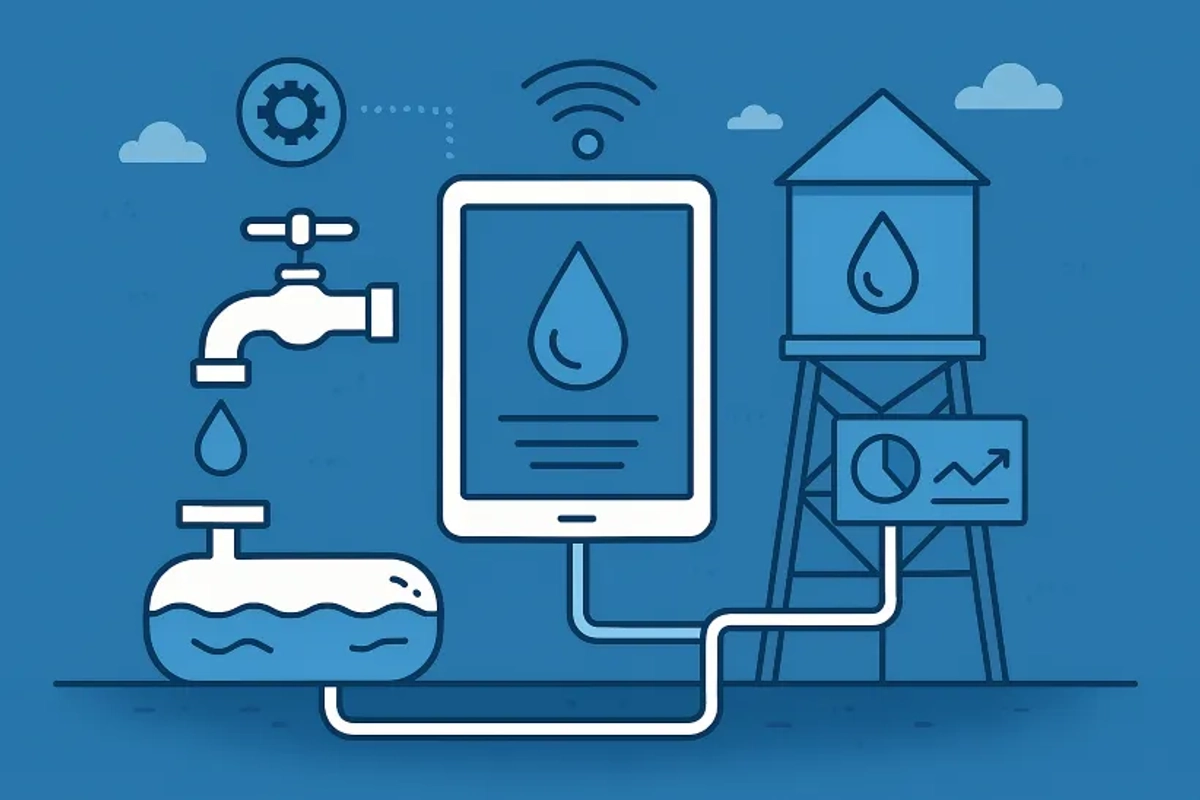
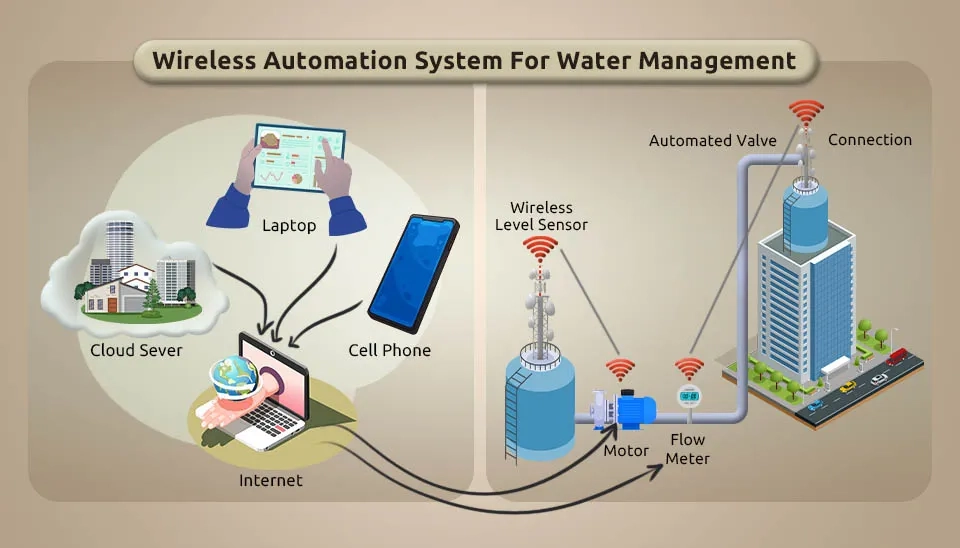
Smart water management in supply systems is essential to optimize the use of water resources and the quality of service. IoT refers to a network of interconnected devices that use wireless sensors to collect and transmit data in real-time (Gonçalves et al., 2020). IoT-based smart water management systems generally consist of a controller, sensors, and an application to display the data. Use of IoT platforms provides easy access for remote monitoring and control (Singh and Ahmed, 2021).
Fig. 3. Interconnected IoT devices for real-time water monitoring.
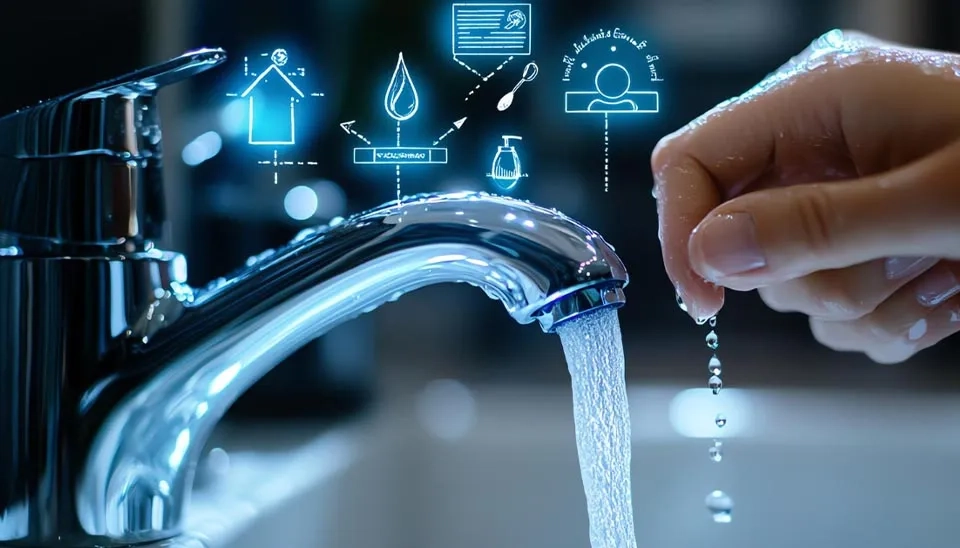
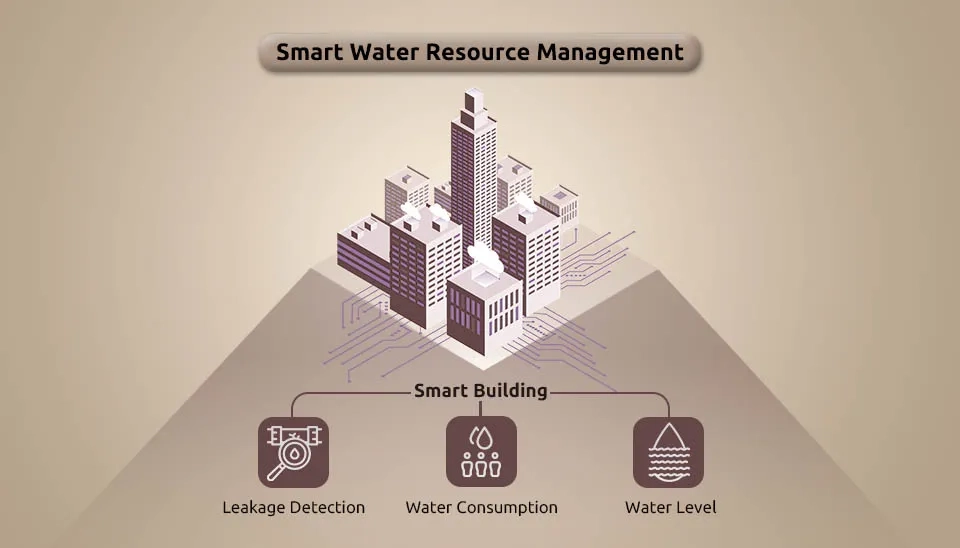
Devices in an IoT system can transfer data without human interaction, thereby making them ideally suitable for real-time water distribution, leakage, and level monitoring. The IoT forms an important part of intelligence, which will take care of consumer utilization, water theft detection, water quality control, fault prediction and fault localization. (Narayanan et al. 2020). A smart water monitoring system based on the internet of things will make users mindful of their water consumption and help them reduce their usage. Simultaneously, the system will alert users to abnormal water usage, thereby reducing water loss. This technology also allows easy measurements of water quality for the presence of various contaminants (Sarraf et al., 2020).
Fig. 4. Automation and remote monitoring in smart water systems.
3. Benefits of IoT-Based Smart Water Management Systems
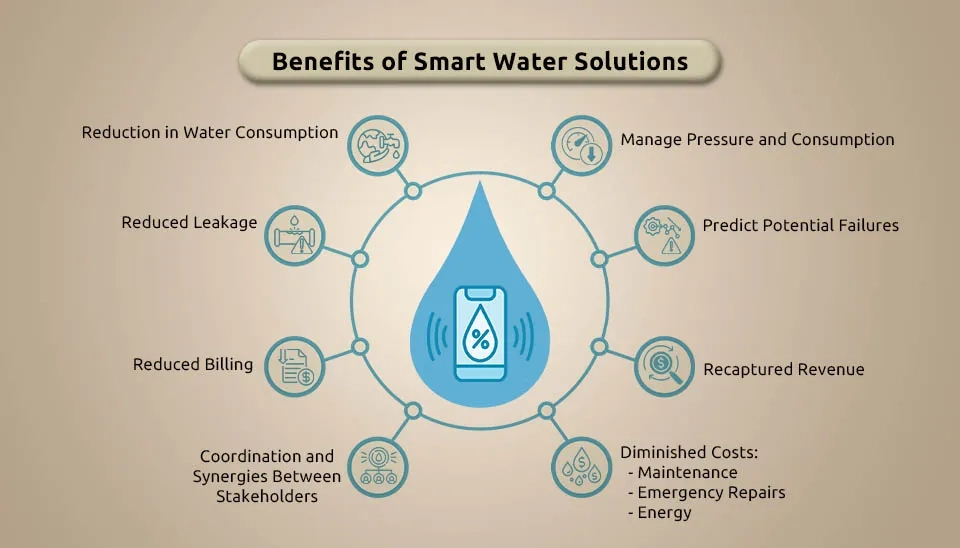
In general, smart water management technology can increase the efficiency and stability of a water delivery system while lowering costs and boosting longevity (Gopinath et al., 2022). The integration of the IoT into water management systems can provide several benefits. The main advantages of adopting an IoT approach for smart water management systems are improving water management infrastructures by increasing their efficiency, reducing energy costs and human intervention; resource conservation, reducing water management costs; process optimization by using sensors and connectivity; and increasing productivity (Robles et al., 2014; Pacheco et al., 2017).
The wireless data transmission allows the consumers to measure their water consumption so they can preserve and reduce the water bill, in some cases above 30% (Ramos et al., 2020). In addition, smart water management contributes to leakage reduction, water quality assurance, improved customer experience, and operational optimization, among other key performance benefits (Mounce et al., 2015; Howell et al., 2017). The two main advantages are discussed more in the following.
Fig. 5. Benefits of smart water management systems.
3.1. Real-Time Alerts for Timely Action
The IoT-based smart water management system can help detect water leaks in a smart home through real-time alerts by analyzing water levels during different hours of the day (Jan et al. 2021). Whether it is a leak, low temperatures, or other potential issues, you will receive real-time alerts via the app, text messages, or phone calls. These timely notifications enable you to take immediate action and prevent further damage to your home. These smart water leak detectors allow you to check the water condition via smartphones.
One of the key features of smart water systems is their ability to automatically shut off the water supply when a leak is detected. This functionality enables you to halt leaks immediately. Even when you're away from home, you can remotely close the water valve through the smart apps.
Fig. 6. Water leak detection with an IoT based smart water system.
3.2. Conservation Goals for Water Savings
In addition to protecting your home, IoT promotes water conservation. Some of the smart water systems allow you to view your daily water consumption and set conservation goals. By understanding your water usage habits, you can make informed decisions and actively contribute to water savings.
The use of innovative technologies, such as information and control technologies and real-time water level monitoring, can significantly reduce wastage of water due to overflow from tanks. The implementation of smart water system technologies enables water and energy conservation and water quality monitoring (Singh and Ahmed, 2021).
Fig. 7. Advanced IoT tools for tracking domestic water consumption.
4. Challenges in Implementing IoT-based Smart Water Management
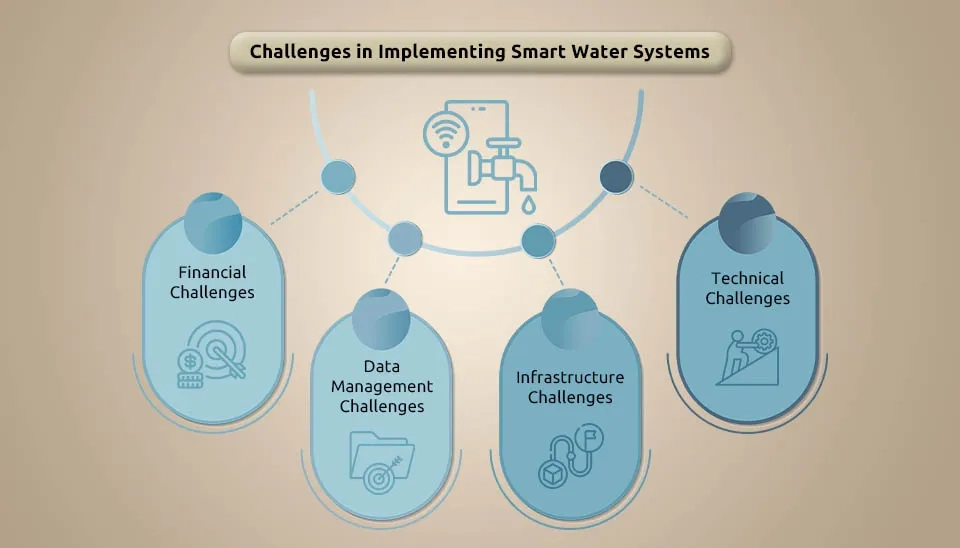
As IoT is growing every day with new technologies involved, new challenges arise. The IoT has encouraged people to connect to devices using the internet, and the increase in the use of IoT devices motivated people to use smart technologies. The water quality in the distribution system is a serious factor that affects public health, and smart water systems provide a user-friendly interface to monitor the water quality in houses and take remedial measurements if necessary. One of the main challenges in a smart water management system is managing the cost, energy and efficiency requirements for the distribution system. The selection of quality, quantity and topological parameters is another challenge for a smart water system. So there is a need for research about these challenges to provide a new cost- and energy-efficient solution to the smart water system. Bhandari et al. 2023 discuss some of these challenges.
Fig. 8. Strategic barriers in deploying IoT based smart water systems.
4.1. Financial Challenges
Developing and implementing IoT can be expensive due to the cost of hardware, software, and installation. The cost can be a significant barrier for small businesses and individuals who may not have the resources to invest in these systems.
4.2. Technical Challenges
IoT requires advanced technologies such as IoT sensors, big data analytics, and AI algorithms. Implementing these technologies can be challenging for organizations that lack the technical expertise to develop and maintain their systems.
4.3. Infrastructure Challenges
Upgrading existing water infrastructure to support smart water systems can be a significant challenge. Old water infrastructures might not support the latest IoT technologies, and upgrading them can be both costly and time-consuming.
4.4. Data Management Challenges
IoT generates large amounts of data, which can be difficult to manage and analyze. Organizations need to have the right tools and expertise to collect, store, and analyze this data effectively.
Fig. 9. Smart building integration for urban water resource management.
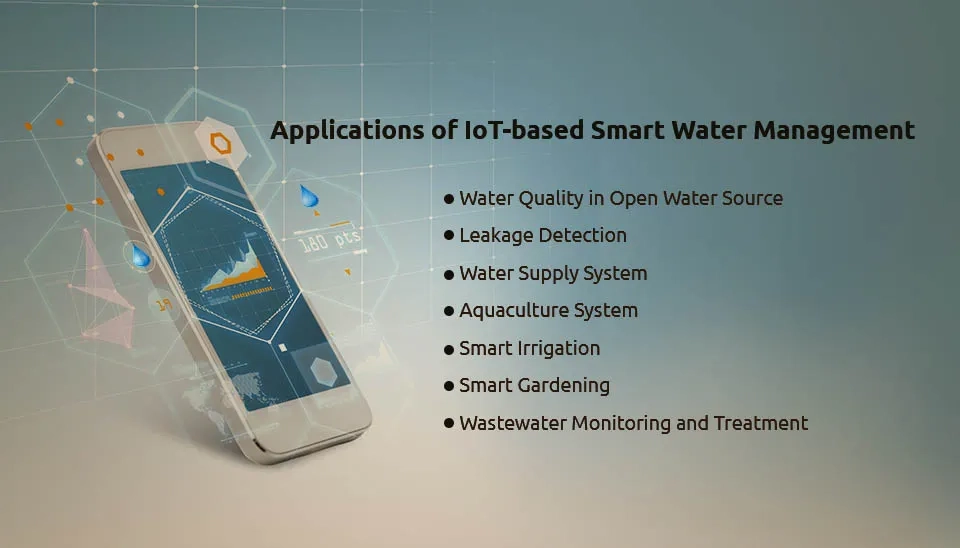
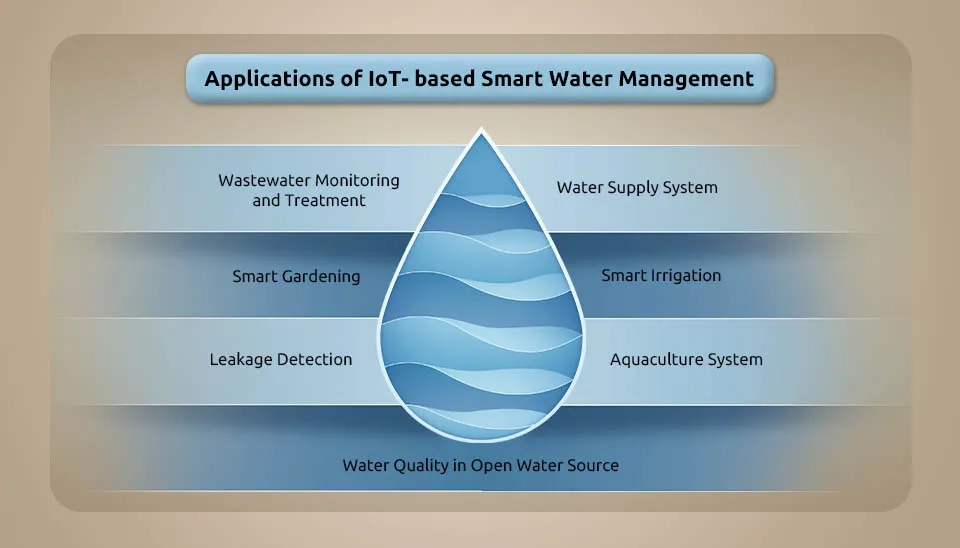
5. Applications of IoT-based Smart Water Management
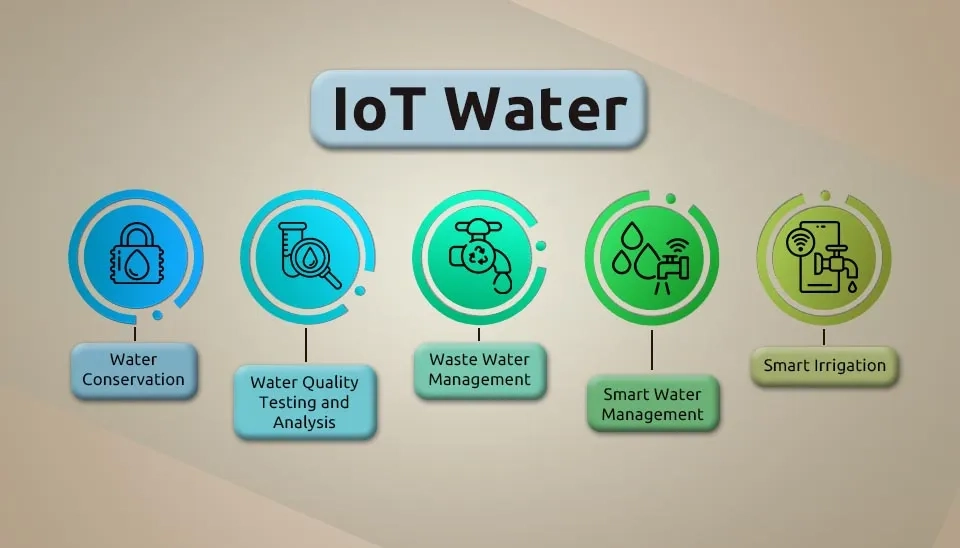
Innovative technologies, such as IoT-based smart water management systems, specifically focus on monitoring, controlling, and managing water levels, water consumption, water quality, water leakage, and wastewater and treatment (Radhakrishnan and Wu, 2018).
Fig. 10. Diverse applications of IoT-based smart water management in monitoring and control.
5.1. Water quality in open water source
Water quality monitoring of open water sources was another application that was implemented using IoT devices. It helps to preserve the water quality and protect the health of the economy using low-cost devices and network virtualization (Menon et al., 2017).
5.2. Leakage Detection
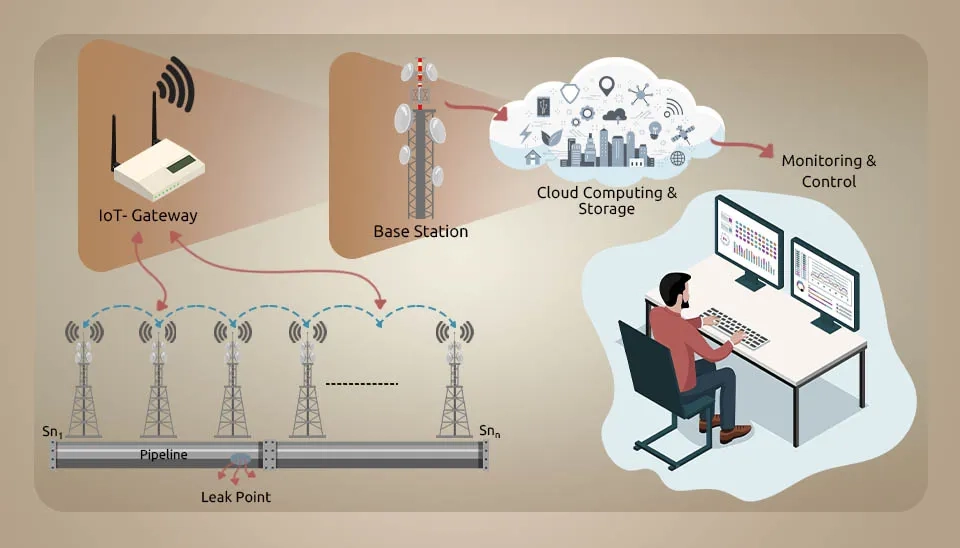
Another application developed due to the growth of IoT is pipe leakage detection. Different IoT devices, Wireless Sensor Networks (WSN) and cloud services can be used to detect and alert the user about the pipe leakage because a good amount of water wastage is occurring through leakage. In case of emergencies, smart water monitoring systems are designed to detect leakages and automatically shut off the water supply. Nowadays, more homeowners are using smart water systems to prevent water damage to their appliances (Narayanan et al. 2020).
Fig. 11. End-to-end IoT pipeline monitoring and leak localization system.
5.3. Water Supply System
The pH and temperature of water are important parameters in the assessment of water quality, which can be measured with IoT-based smart water quality monitoring. For a safe drinking water system, each of these parameters has a threshold value above which water quality can be compromised (Adedeji et al., 2019).
5.4. Aquaculture System
Aquaculture is a method that uses IoT to determine and alert users about the water quality necessary for culturing aquatic organisms. The application also serves the purpose of monitoring the plant's environment in aquariums. It helps the aquatic farmers to recycle the water whenever they receive user alerts on their mobile devices and results in increased productivity.
5.5. Smart Irrigation
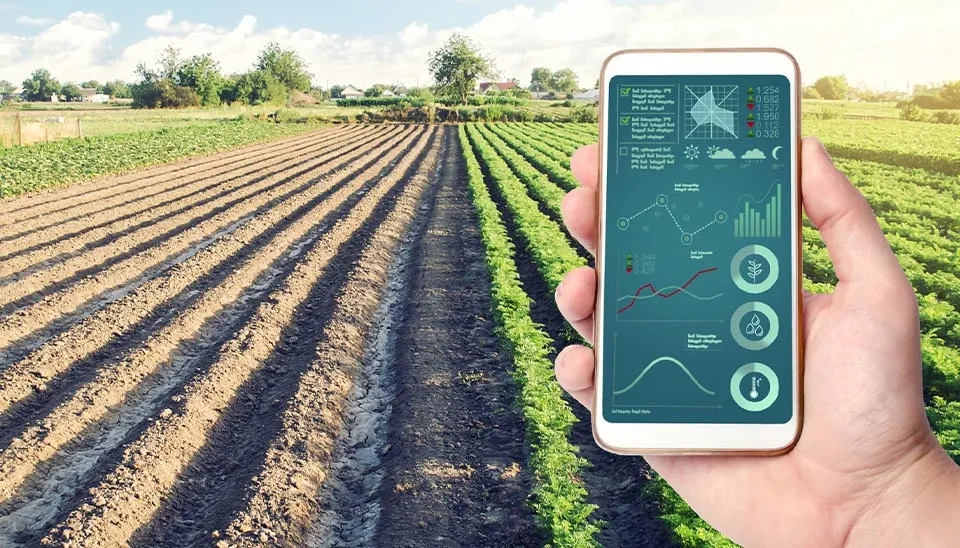
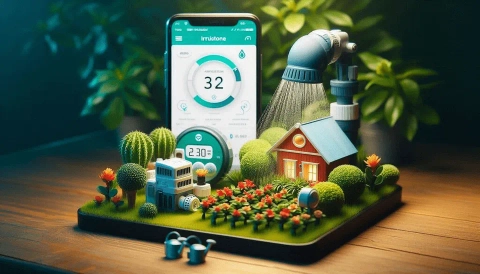
IoT-based mobile applications have developed in farming to control the amount of water for crops based on the surrounding temperature. It also manages the whole irrigation system by smartly monitoring the soil and growth of the crops, and the irrigation sprinkler will get activated whenever necessary, thereby reducing the water wastage and workload.
Fig. 12. Smart irrigation interface for real-time agricultural water management.
5.6. Smart Gardening
It uses a set of sensors to detect temperature, light, water, and soil moisture, along with a mobile application that reminds users of the necessary amounts of water and nutrients for the plants.
5.7. Wastewater Monitoring and Treatment
Wastewater monitoring and treatment is another upcoming application in IoT to treat the wastewater and use it for household activities, thereby saving the amount of water and reducing wastage to a significant extent (Wu et al., 2017).
Conclusion
IoT-based smart systems for water management and advanced monitoring solutions have become essential for safeguarding homes from water damage. You can act quickly to avert water-related disasters with real-time alerts and preventative protection. Adopting smart water systems promotes water conservation while also guaranteeing the security of your house.
The future of water management can be seen in smart water systems, which provide various advantages to residents, businesses, and communities. These systems are capable of monitoring irrigation systems, detecting leaks, and encouraging water conservation, which is essential for addressing water scarcity and safeguarding our most priceless resource.
IoT Based Smart Water Management Systems: Applications, Benefits and Challenges | Waterlyst




Comments
No comments yet
Be the first to comment
Share your thoughts and start the conversation.