Intergovernmental Panel on Climate Change Assessment Reports: From FAR in 1990 to AR6 in 2022
IPCC Assessment Reports (ARs): The scientific foundation for global climate policy. Discover key findings on climate change impacts, adaptation, and mitigation strategies from FAR (1990) to the latest AR6 (2022).
Look at these statistics: 0.14°F rise in temperature per decade, 0.17°F rise in land surface temperature per decade, and 3°F rise in winter temperatures since 1896 (NOAA, 2022; EPA, 2023a; EPA, 2023b). Why?
Global warming, or climate change, is a phenomenon that originates from the burning of fossil fuels such as coal, oil, and gas, the destruction of forests, agricultural and industrial activities, etc., which is associated with the release of heat-trapping gasses. Climate change has caused the world's temperature to increase significantly, and it is expected that the temperature will increase more intensively in the future. Climate change on a global scale involves different countries and has many negative effects. An increase in temperature, a decrease in freezing days, an increase in sea level, a decrease in snow cover, a change in the pattern and intensity of heavy rains, an increase in wind, and stronger storms are among the effects of climate change. These effects and changes have affected human health, agriculture, water supply, living organisms, and many aspects of human and animal life and have created many problems (Karl et al., 2009).
Therefore, it is necessary to publish climate change assessment reports (or global warming assessment reports) to get a more accurate view of climate change. By increasing awareness of climate change and global warming, climate change assessment reports help to improve the current situation by modifying the behavior of industrial managers and reducing potential threats. (Woodward et al., 2014). This article, by reviewing global warming assessment reports and focusing on IPCC assessment reports, can be effective in increasing awareness of climate change.
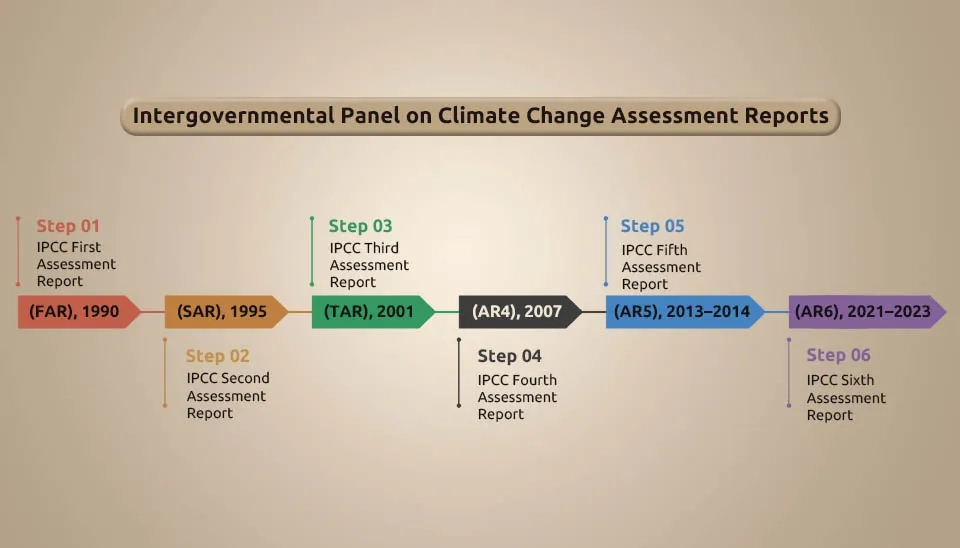
Fig. 1. The 6 Major IPCC Climate Change Reports: A full history of ARs (FAR to AR6).
1. Climate Change Reports
Global warming assessment reports, by providing climate change statistics, have introduced strategic research programs so that, by forming an international environmental treaty, it is possible to deal with destructive human interference in the climate system. Prominent and famous climate change reports include Intergovernmental Panel on Climate Change Assessment Reports (IPCC Assessment Reports), United Nations Framework Convention on Climate Change Reports (UNFCCC Reports), and U.S. Global Change Research Program Reports (USGCRP Reports). (UNFCC Reports; USGCRP Reports; IPCC Reports).
Fig. 2. Young Environmentalists and Climate Change Activists demanding urgent action.
2. Intergovernmental Panel on Climate Change Assessment Reports
The Intergovernmental Panel on Climate Change (IPCC) is a scientific and authoritative organization established in 1988 by the United Nations Environment Program (UNEP) and the World Meteorological Organization (WMO) to evaluate scientific, technical, and socio-economic information. The IPCC assessment reports contain valuable information about climate change, its potential effects, and causes, which are considered a valid reference and basis for international climate negotiations and political decisions. In addition to climate change, the IPCC publishes various reports on specific issues and methodology reports, which include practical and effective guidelines for presenting the status of greenhouse gases. The IPCC's role in evaluating information is not limited to the publication of evaluation reports; it also organizes expert meetings, workshops, main authors' meetings, and various communication events where the latest findings, results, and methodologies are shared. The IPCC has produced and published several Assessment Reports (ARs) in the last 3 decades, from TAR in 1990 to AR6 in 2021–2022, which are described in detail below (IPCC Reports). The names of the IPCC assessment reports are FAR, SAR, TAR, AR4, AR5, and AR6 in the order of publication.
Fig. 3. The IPCC Assessment Reports organization logo, key to global climate change policy.
2.1. IPCC First Assessment Report (FAR), 1990
Here we are going to review the IPCC First Assessment Report with the cooperation and support of different countries (Australia, the United States of America, Canada, the Netherlands, Germany, France, Norway, Austria, Spain, the United Kingdom, and Germany). The IPCC First Assessment Report consists of the IPCC Overview, three reports of the Working Groups, and the policymaker of the three IPCC Working Groups, the IPCC Special Committee on the Participation of Developing Countries. The overview of the IPCC First Assessment Report deals with a more accurate and complete understanding of the challenges of climate change caused by human factors and expresses the general direction of possible measures to solve the problems, such as holding negotiations centered on the influencing factors. The solutions, options, and issues mentioned in the IPCC First Assessment Report guide negotiators and policymakers to align their duties with solving the challenge of climate change. This requires comprehensive cooperation from all societies and governments to pay more attention to the report and meet the technical requirements of the experts mentioned in the report (IPCC First Assessment Report). The IPCC First Assessment Report consists of 4 reports; the names of the reports and their sources are given below:
The scenarios presented in the IPCC First Assessment Report include the likely pattern of future greenhouse gas emissions and the broad responses that may affect those patterns. However, the existing and inherent challenges in evaluating and estimating the future rates of population and economic growth, individual behaviors, technological innovations, and other factors affecting the rate of greenhouse gas emissions have caused uncertainty in the forecasts and prevented a complete assessment of the total costs, economic benefits, technological feasibility, or market potential from becoming fundamental policy assumptions. The response to the challenges and limitations requires investigating and identifying the best scenarios of greenhouse gas emissions in the next century to guide the development of response strategies (IPCC First Assessment Report).
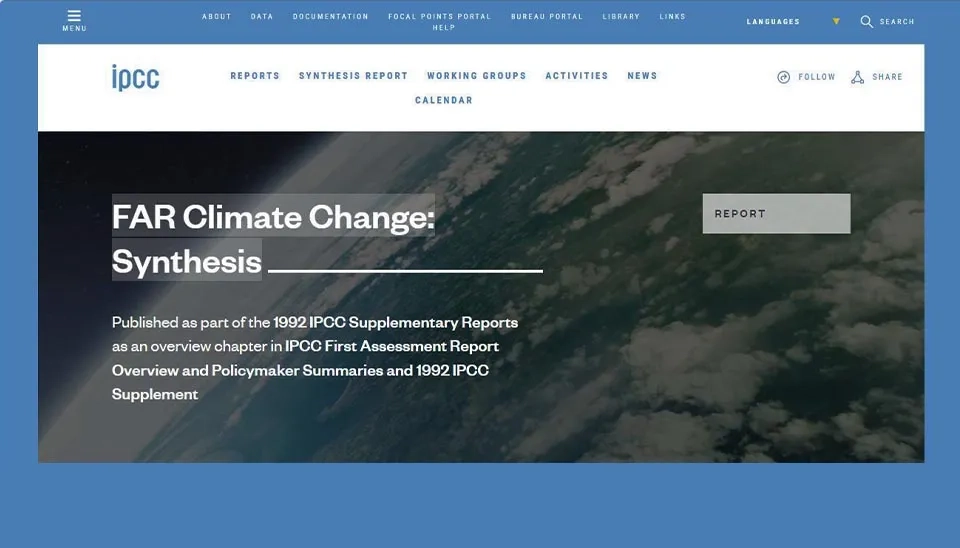
Fig. 4. FAR Climate Change: Synthesis, the first comprehensive climate change report by IPCC.
2.2. IPCC Second Assessment Report (SAR), 1995
The IPCC Second Assessment Report was presented in 1995 with the aim of a scientific and comprehensive assessment of climate change based on the findings of the First Assessment Report (FAR), which deals with a detailed understanding of the causes, impacts, and potential solutions of climate change. The IPCC Second Assessment Report consists of several volumes; in each volume, different aspects of climate change are discussed. For example, in addition to the general review of impacts, adaptations, and mitigation of climate change, the economic and social dimensions of climate change were discussed and published in a separate volume to get a more complete view of climate change. The IPCC Second Assessment Report has addressed the impact of climate change on various sectors such as water resources, agriculture, human health, and ecosystems and has emphasized the vulnerability of developing countries and the need for international cooperation. Therefore, the IPCC Second Assessment Report has played an important role in the formation of negotiations and international organizations such as the negotiations under the United Nations Framework Convention on Climate Change (UNFCCC) and the Kyoto Protocol focusing on climate change and reducing greenhouse gas emissions (IPCC Second Assessment Report). The IPCC Second Assessment Report consists of 4 reports, the names of the reports and their sources are given below:
The IPCC Second Assessment Report, similar to the IPCC First Assessment Report, deals with the role of the human factor in increasing the concentration of greenhouse gases through the burning of fossil fuels and provides more accurate and improved predictions based on global warming scenarios at different levels of emissions. On the other hand, the improvement of observational data, the integration of natural and human factors, and the improvement of climate modeling helped to simulate and predict climate change more accurately in the IPCC Second Assessment Report. The climate change scenarios presented in the IPCC Second Assessment Report have helped to introduce sustainable development practices and advance adaptive strategies to deal with climate change (IPCC Second Assessment Report).
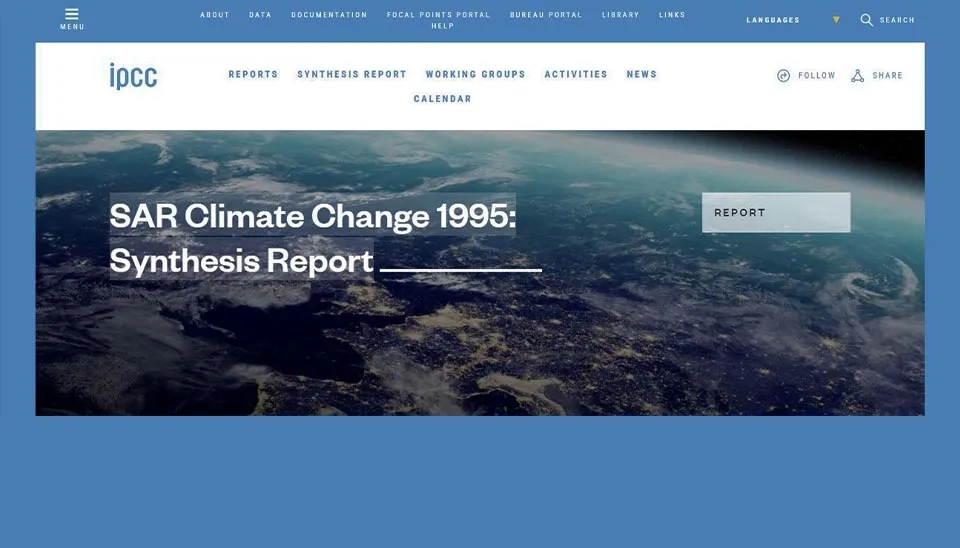
Fig. 5. The IPCC Second Assessment Report (SAR) Synthesis Report, published in 1995.
2.3. IPCC Third Assessment Report (TAR), 2001
The IPCC Third Assessment Report (TAR) was published in 2001, providing a more comprehensive and up-to-date assessment of the state of climate change, more accurate climate models, deeper knowledge of the Earth's climate system, and a better understanding of natural climate variability. Therefore, the climate change scenarios introduced in the IPCC Third Assessment Report are more capable of estimating the future temperature increase based on different greenhouse gas emission scenarios. Similar to the previous IPCC Assessment Reports, the IPCC Third Assessment Report sees human activities caused by burning fossil fuels as the main drivers of increasing the concentration of greenhouse gases and global warming. However, the IPCC Third Assessment Report discussed various dimensions of climate change and global warming and their relationship with other phenomena such as rising sea levels, the increasing frequency of extreme weather events, and changing precipitation patterns. Examining the global and regional effects of climate change and its effects on different parts of human life such as agriculture, coastal areas, vulnerability of developing countries and indigenous peoples, water, and human health were among the goals and achievements of the IPCC Third Assessment Report, and finally presenting a reduction strategy (reduction of greenhouse gas emissions) and adaptation (adjusting to the effects of climate change) such as exploring renewable energy sources and adopting sustainable practices to deal with and adapt to climate change (IPCC Third Assessment Report). The IPCC Third Assessment Report consists of 4 reports; the names of the reports and their sources are given below:
The reports presented in the IPCC Third Assessment Report focus on different aspects of climate change. The aspects included in the IPCC Third Assessment Report include climate system, observed climate variability and change, carbon cycle and atmospheric carbon dioxide, atmospheric chemistry, greenhouse gases, aerosols, their direct and indirect effects, radiative forcing of climate change, changes in sea level, and projections of future climate change. The IPCC Third Assessment Report played an important role in further understanding climate change and its potential impacts (IPCC Third Assessment Report).
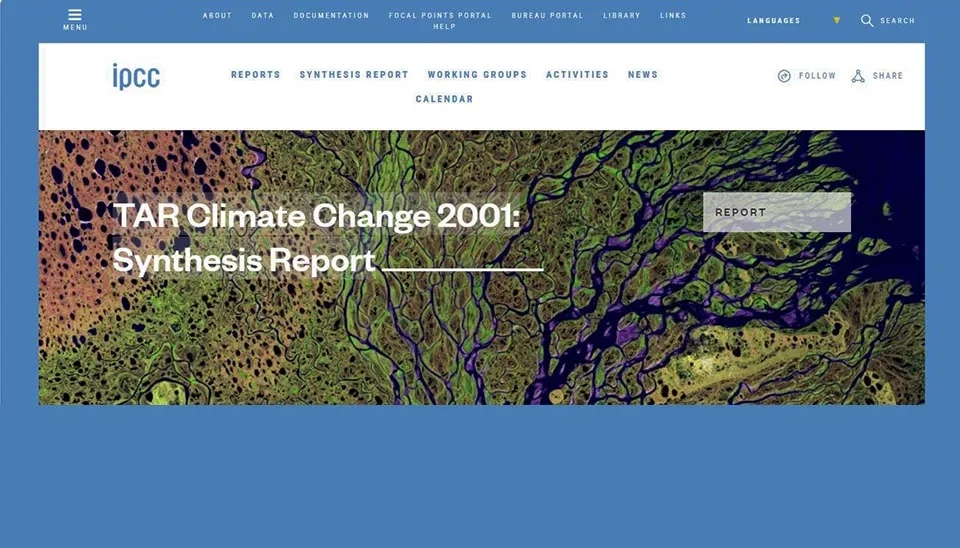
Fig. 6. The Third Assessment Report cover, detailing projections of future climate change.
The IPCC Fourth Assessment Report, similar to previous reports, emphasized the role of the human factor in the emission of greenhouse gases through fossil gas burners (the main driver) and addressed the regional and global effects of global warming. The findings and estimates of the IPCC Fourth Assessment Report can indicate an increase of 2 to 11.5 degrees Fahrenheit in the average global temperature by the end of the 21st century (depending on different scenarios of greenhouse gas emissions). In addition, the IPCC Fourth Assessment Report has predicted that the sea level will rise by about 20 to 60 cm by the end of the 21st century, and in more severe scenarios of greenhouse gas emissions, we can expect more sea level rise (IPCC Fourth Assessment Report). The IPCC Fourth Assessment Report consists of 4 reports; the names of the reports and their sources are given below:
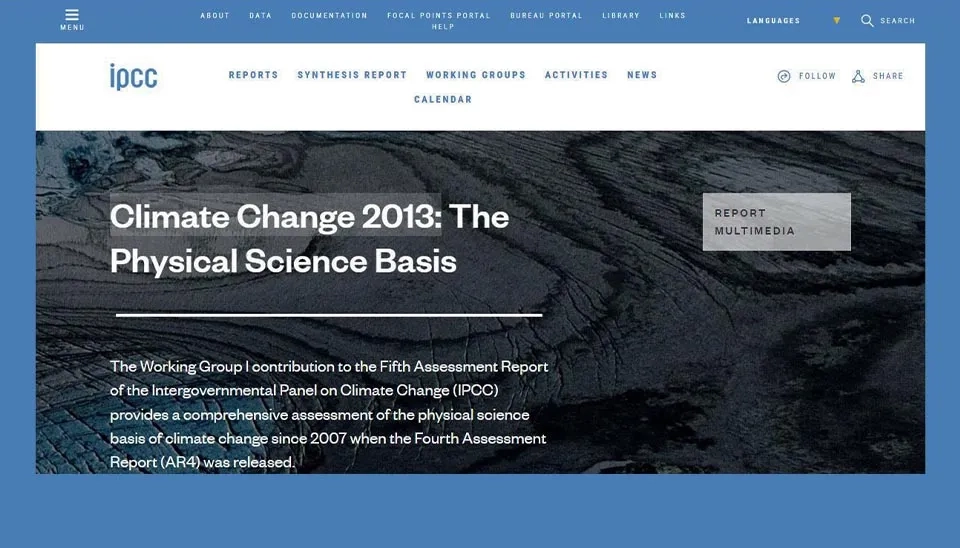
The IPCC Fifth Assessment Report was published in several volumes in 2013 and 2014. According to the findings of the IPCC Fifth Assessment Report, human activity is to blame for each of the last three decades being successively warmer than any decade before 1850. The IPCC Fifth Assessment Report predicts that by the end of the 21st century, under various greenhouse gas emission scenarios, global temperatures will rise by 0.5 to 8.6 degrees Fahrenheit, and average sea levels will rise by 26 to 82 centimeters by the end of the century, compared to 1986–2005 average levels. (IPCC Fifth Assessment Report). The IPCC Fifth Assessment Report consists of 4 reports, the names of the reports and their sources are given below:
The chapters in the physical science basis of the IPCC Fifth Assessment Report cover various aspects, including (IPCC, 2013):
Observations: atmosphere and surface
Observations: ocean
Observations: cryosphere
Information from paleoclimate archives
Carbon and other biogeochemical cycles
Clouds and aerosols
Anthropogenic and natural radiative forcing
Evaluation of climate models
Detection and attribution of climate change: from global to regional
Near-term climate change: projections and predictability
Long-term climate change: projections, commitments, and irreversibility
Sea level change
Climate phenomena and their relevance for future regional climate change
Mitigation of climate change in the IPCC Fifth Assessment Report includes energy systems, transport, buildings and infrastructure, industry, agriculture, forestry, and other land use, covering their mitigation through sustainable development and equity by considering social, economic, and ethical methods (IPCC, 2014).
2.6. AR6 (2021–2023): Latest Findings on Irreversible Climate Change
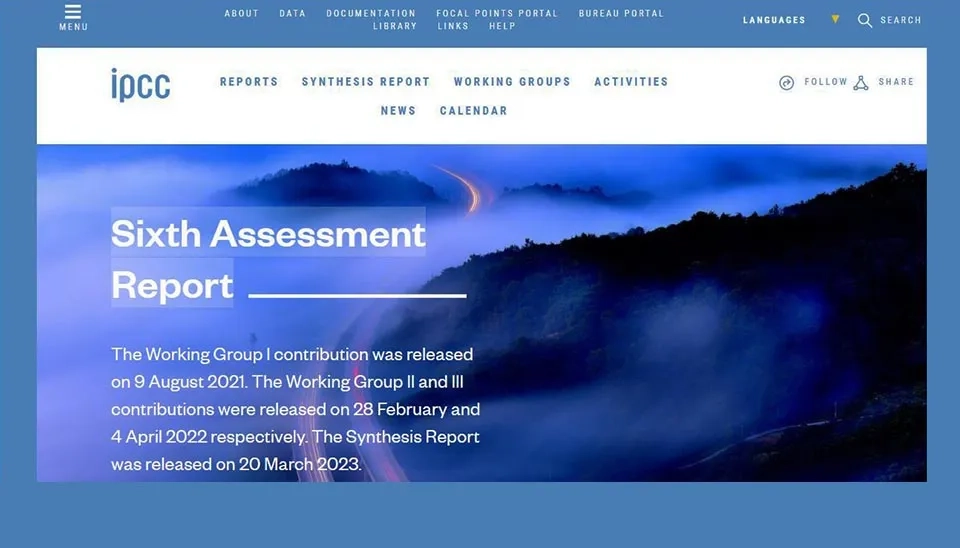
The IPCC Sixth Assessment Report is the latest and most comprehensive assessment of climate change and global warming published by the Intergovernmental Panel on Climate Change in 2021–2023. The IPCC Sixth Assessment Report consists of several reports, including the Synthesis Report, contributions from Working Group I on the physical science basis, Working Group II on impacts, adaptation, and vulnerability, and Working Group III on mitigation of climate change (IPCC Sixth Assessment Report).
The IPCC Sixth Assessment Report consists of two parts: historical and present period and long-term climate (until the year 2100 and after) and shows that the temperature of the earth's surface has increased by 1.1 degrees Celsius since the pre-industrial era and introduces the consequences of global warming. Increasing heat waves, droughts, heavy rainfall events, the loss of ice sheets and glaciers, rising sea levels, and the acidification of oceans are the effects of climate change and global warming. The IPCC Sixth Assessment Report has stated that some effects of climate change, such as sea level rise, are irreversible in the long term (centuries to millennia) and require quick and global actions with the participation of societies and governments to reduce the severity of the effects of climate change. Also, the IPCC Sixth Assessment Report has predicted that continued climate change will pose increasing risks to human and natural systems, including the possibility of widespread species extinction, ecosystem disruption, food and water insecurity, increased poverty, and impacts on health and well-being (IPCC Sixth Assessment Report). The IPCC Sixth Assessment Report consists of 4 reports; the names of the reports and their sources are given below:
Fig. 9. The latest IPCC Sixth Assessment Report (AR6) Synthesis was released on 20 March 2023.
3. Conclusion
In this article, the Intergovernmental Panel on Climate Change Assessment Reports (IPCC Assessment Reports) was discussed. IPCC Assessment Reports began in 1990 with the publication of the IPCC First Assessment Report, and in 2023, its latest version (the IPCC Sixth Assessment Report) was published. The IPCC Assessment Reports consist of four volumes: 1) Physical Science Basis; 2) Impacts; 3) Mitigation; and 4) Synthesis Report. Working Group I (WGI) publishes Science Basis, which focuses on physical science and the causes and drivers of climate change. The Impacts and Mitigation volumes were published with the participation of Working Group II (WGII) and Working Group III (WGIII), respectively, and they focus on the effects and mitigating strategies of climate change. The Synthesis Report is a summary of Science Basis, Impacts, and Mitigation reports and publishes an overview of scientific, technical, and socioeconomic findings. In general, the IPCC Assessment Reports share a common point of view on the role of the human factor in the main causes of global warming and emphasize international cooperation between different societies and governments to prevent serious climate change through sustainable development policies and avoiding fossil fuels. According to IPCC Assessment Reports, rising sea levels, melting of ice and snow, drought, increasing occurrence of extreme events, changing precipitation patterns, endangering ecosystems, and human health are among the threats and consequences of climate change.
IPCC ARs: From FAR in 1990 to AR6 in 2022 | Waterlyst











Comments
No comments yet
Be the first to comment
Share your thoughts and start the conversation.