Plastic Pollution in Oceans and Seas: Unveiling its Sources, Types, and Potential Effects
What if the ocean became a plastic graveyard?
AAlireza Moradi
· 61 views
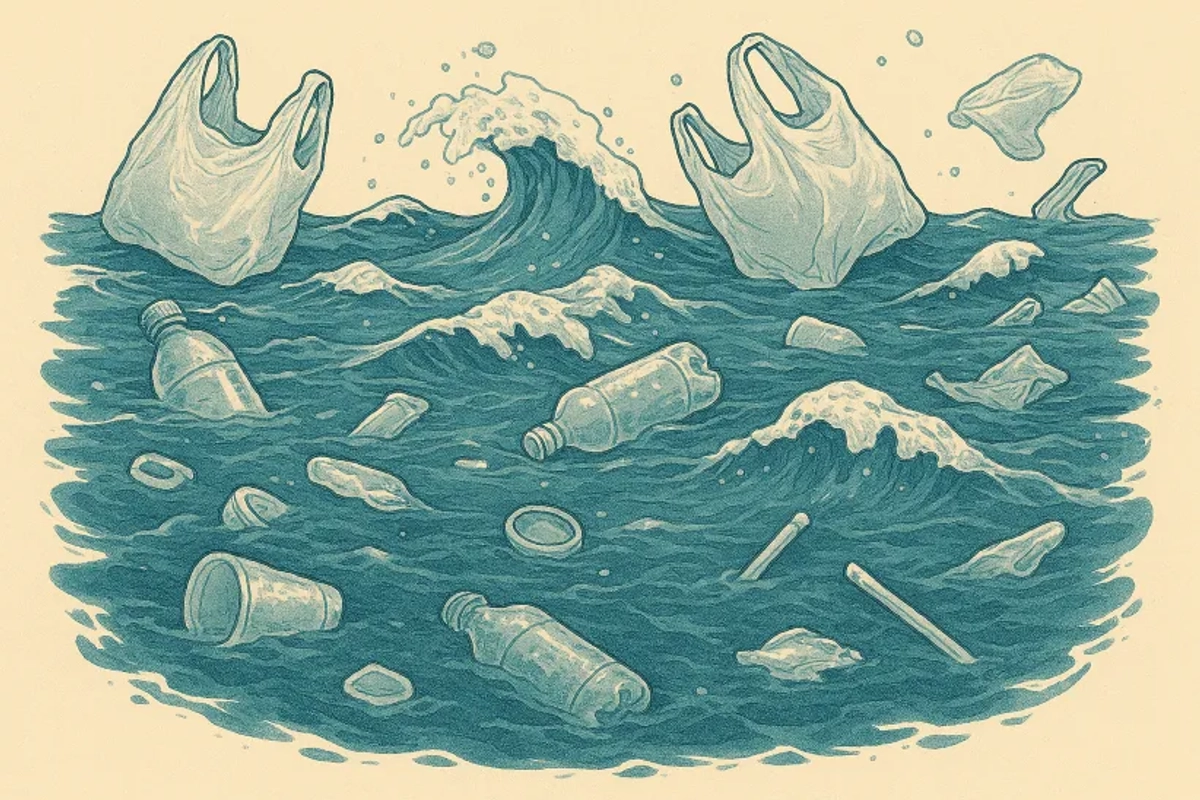
What if the ocean became a plastic graveyard?
Quick answers to common questions.
Imagine an ocean or a sea full of plastic garbage instead of marine biodiversity. How will you feel? At first glance, you may think that it is impossible, the current trend in releasing plastic into oceans and seas, however, approaches us to a world where oceans and seas are filled by plastic pollution. What is the solution? The answer is recognizing plastic pollution sources and types, and forecasting its potential effects.
Plastic pollution in oceans and seas is a crucial and pervasive phenomenon nowadays. Accordingly, people, governments, societies, and media pay special attention to plastic pollution, especially in the oceans and seas. Plastic pollution in oceans and seas has become so challenging that in 2017, about 200 countries signed the UN draft resolution on marine litter and microplastics and considered this challenge important. Despite the media and people's attention to plastic pollution in oceans and seas, statistics show that only paying attention to this issue cannot prevent the release of plastic pollution in oceans and seas since millions of tons of plastic waste enter the oceans and seas every year and it is predicted that by 2030 and 2050, its amount will double and quadruple, respectively, which will lead to a global disaster (Ballerini et al., 2018).
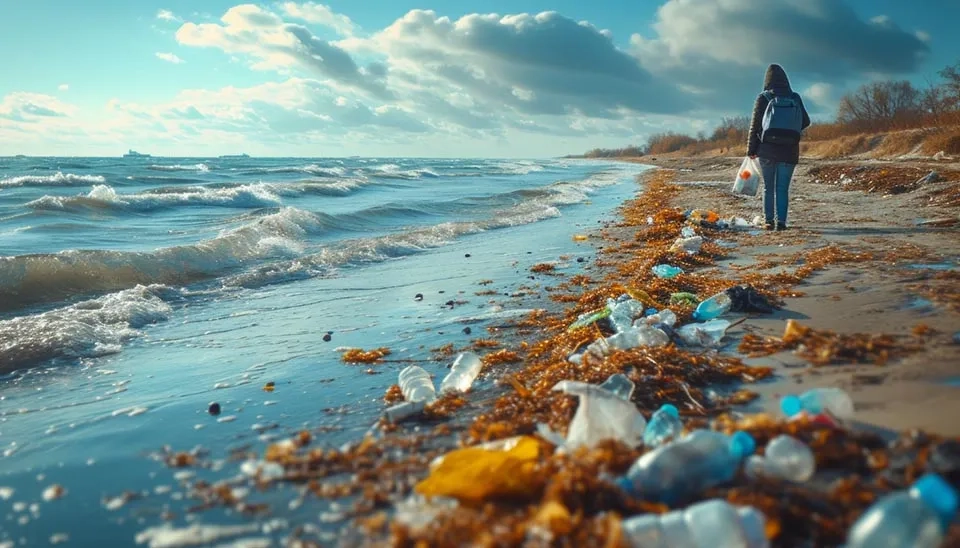
Fig. 1. Accumulation of plastic waste and debris along a coastline, threatening marine biodiversity and human health.
The release of plastic pollution in oceans and seas has affected a wide range of marine biodiversity and human health, including environmental, economic, and social effects. Plastic waste in general, due to its durability, persistence, huge volume, and chemical compounds, requires knowing its sources and identifying its possible risks to control plastic pollution in oceans and seas (Wabnitz and Nichols, 2010). In this article, we will discuss the types, sources, and effects of plastic pollution in oceans
Due to their durability and stability, plastics can remain in the environment for a long time and spread throughout the world. Therefore, plastic pollution is spread in water systems such as oceans, seas, the atmosphere, and land (Do Sul and Costa, 2014). One of the water ecosystems that host millions of tons of plastic pollution is oceans and seas. Previous studies show that between 8 and 12 million tons of plastic pollutants enter the oceans every year, the exact amount of which, according to previous studies, is 8.28 (UN Environment, 2018), 12.2 (EUNOMIA, 2016), and 10 (Boucher and Friot, 2017) million tones per year.
Among the oceans, the North Pacific, the Indian Ocean, the North Atlantic, the South Pacific, and the South Atlantic contain the most plastic pollution, respectively. In addition, plastic pollution of different sizes is also present in all parts of the oceans, which are moved by surface currents and prevailing winds. The mechanism of plastic pollution transport (surface currents and prevailing winds) in the long term leads to the accumulation of plastic waste in the center of ocean basins (Eriksen and Lebreton, 2014). In addition to the oceans, the seas are also polluted with plastic pollutants. A significant part of plastic pollutants is transported to the seas through rivers, which is estimated at 0.4-4 million tons per year on a global scale (Schmit et al., 2017)
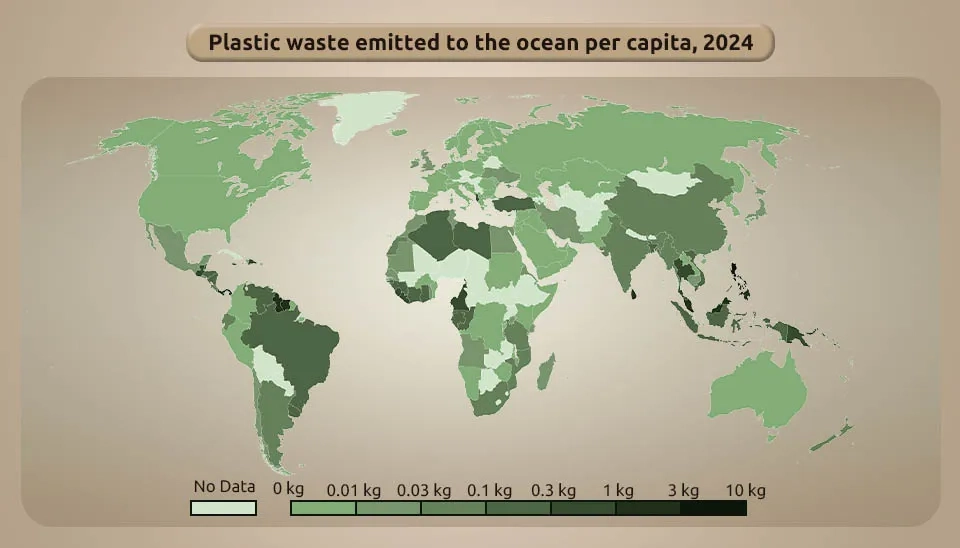
Fig. 2. Choropleth map illustrating the distribution of plastic waste emitted to the ocean per capita by country, 2024.
Plastic pollution has a large variety in size, color, source, resistance to degradation, and potential risks. The only factor involved in plastic pollution in oceans and seas is humans since all plastics are man-made and the entry of plastics into water environments such as oceans and seas is the result of individual, group, and social behavior and decisions of humans. The challenges related to the entry and spread of plastic pollution in oceans and seas have caused social and natural science researchers to think about reducing the entry of plastics into the environment so that less waste enters the oceans and seas, and less fossil fuels are utilized in the production of plastic (Pahl et al., 2017).
Based on their nature, plastic pollution in oceans and seas is divided into two categories: land-based and Marine-based. Land-based plastic pollution originates from land sources and ends up in seas and oceans. Marine-based plastic pollution originates from boats, ships, and coastal platforms and is discharged directly into the oceans and seas as a result of accidental losses, illegal disposal, and unmanaged practices. It is estimated that the amount of land-based plastic pollution is four times that of land-based plastic pollution (Sheavly, 2005). Sources of land-based and marine-based plastic pollution in oceans and seas include the following:
Table 1 Sources of Plastic Pollution in Oceans and Seas
Land-Based Plastic Pollution in Oceans and Seas | Marine-Based Plastic Pollution in Oceans and Seas |
Stormwater drains and discharges during heavy rains | Commercial fishing |
Combined sewer overflows during heavy rains | Coastal oil and gas platforms |
Coastal littering (food packaging, beverage containers, cigarette butts, etc.) | Recreational boaters |
Solid waste disposal and landfills through run-off | Rubbish from vessels |
Industrial activities | Undersea exploration |
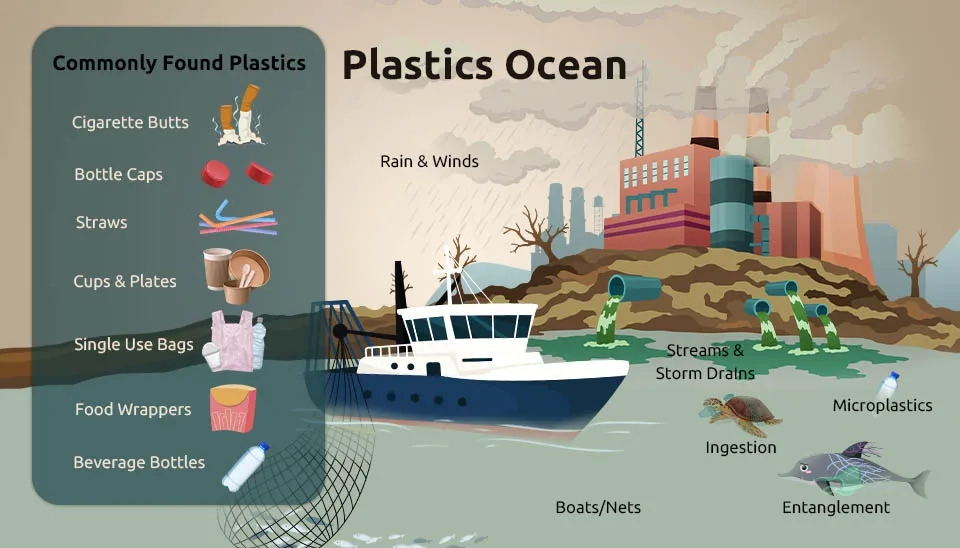
Fig. 3. The path of plastic pollution from industrial runoff and fishing nets to marine animals.
The basis of plastic pollution classification is their size, which is generally classified into megaplastic, macroplastic, mesoplastic, microplastic, and nanoplastic. In the study of plastic pollution in oceans and seas, we mainly divide them into two categories: 1) microplastic with a size of less than 5 mm, and 2) microplastic with a size of more than 5 mm. In the following, types of plastic pollution in oceans and seas (microplastic and microplastic) will be discussed in detail (Hammer et al., 2012; Mattson et al., 2015).
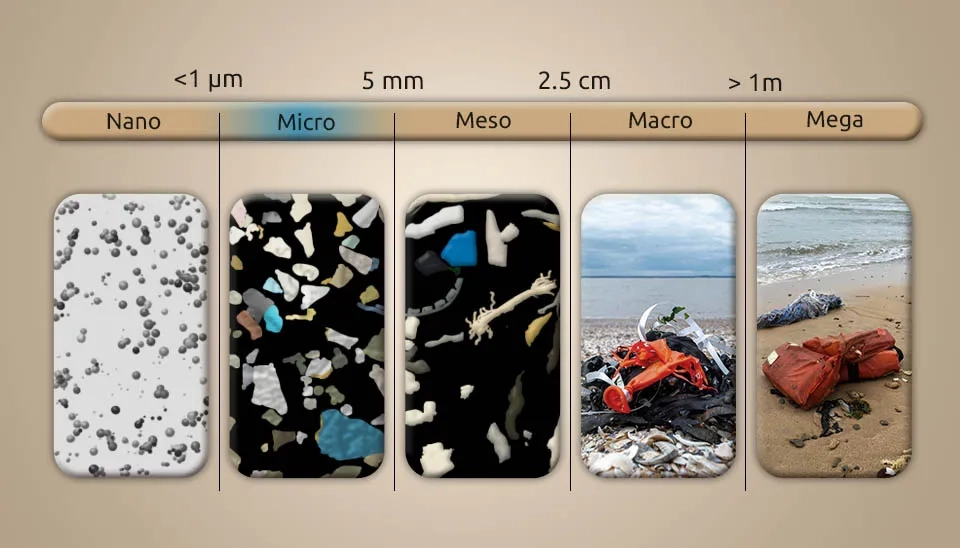
Fig. 4. Visual scale of marine plastic debris size, highlighting Microplastic and Macroplastic categories.
Microplastic pollution in oceans and seas is divided into two categories: 1) Primary microplastic pollution in oceans and seas: Primary microplastic pollution enters the oceans and seas directly. They can be in the form of small particles in cleaners, cosmetics, etc., or originated during the process of manufacturing, maintenance, and utilization (such as abrasion or corrosion of synthetic textiles) and ultimately enter the oceans and seas in the form of small particles. 2) Secondary microplastic pollution in oceans and seas: Secondary microplastic pollution does not enter the oceans and seas in the form of small particles, but it arises from the destruction and physical decomposition of macroplastics (such as plastic bags, fishing nets, etc.) into small plastic segments in the aquatic environment. Photodegradation and weathering processes play a significant role in the production of secondary microplastic pollution (Boucher and Billard, 2013).
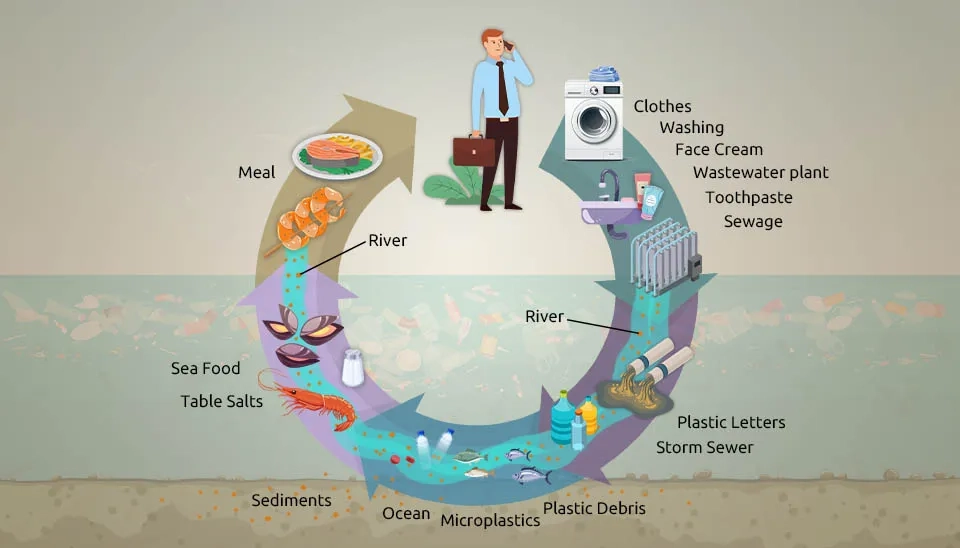
Fig 5. Origins of microplastic pollution in oceans and seas (primary microplastic pollution and secondary microplastic pollution).
Compared to microplastics, macroplastics can be seen with the naked eye, and every year a significant amount of them enter the water environment, especially the oceans and seas. Single-use plastic products, food packaging, bags, plastic straws, plastic bottles, and sanitary materials are among the plastic pollution that have a greater share compared to microplastics in terms of volume, which are generated from fisheries, aquaculture, offshore industries, and coastal tourism activities (Lechthaler et al., 2020). Macroplastic pollution in oceans and seas, similar to microplastics, is divided into two primary and secondary categories in terms of formation, which are explained in section 3.1.
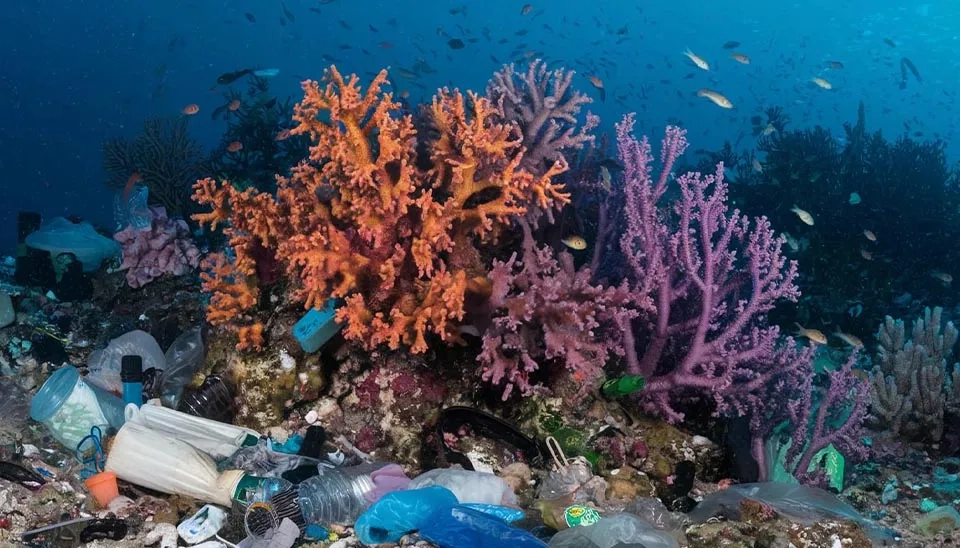
Fig. 6. Coral reefs surrounded by severe plastic pollution and marine debris, increasing the risk of coral disease twentyfold.
The potential effects of plastic pollution in oceans and seas include a wide range of ecosystems and biodiversity. In the following, we discuss the potential effects of plastic pollution in oceans and seas on human health and marine ecosystems in oceans and seas (Carney Almroth and Eggert, 2019).
Ingestion, entanglement in nets, ropes, and other debris, and transport of non-native and invasive species are the most common effects of plastic pollution in oceans and seas on marine ecosystems, which directly or indirectly causes their destruction. Marine organisms sometimes swallow microplastics due to their small size, which causes digestive disorders, effects on reproduction and infertility, metabolic abnormalities, and hormonal disorders. The smaller the size of microplastics (especially nanoplastics), the more likely they are to be eaten by aquatic organisms, and the more negative effects such as disrupting the nutrient cycle and microbial growth on the plastic. In addition, the presence of chemical compounds in plastics and their absorption by marine organisms can cause the transfer of chemical additives into marine organisms and endocrine disorders, developmental disorders, and reproductive abnormalities. The effects of plastic pollution in oceans and seas on marine organisms are more severe in areas where the ecosystem has higher diversity and abundance. Therefore, plastic pollution in coastal areas, high latitudes, and areas near the equator, could face a wider range of marine organisms with severe challenges. On the other hand, the middle of the oceans and seas receives less damage from plastic pollution due to their lower species diversity and relatively low abundance. Furthermore, plastic pollution can affect other creatures that feed on marine ecosystems and live in coastal areas (Wright et al., 2013; Burns and Boxall, 2018; Koehler et al., 2015). In the following, we discuss the details of the effects of plastic pollution on some of the marine ecosystems:
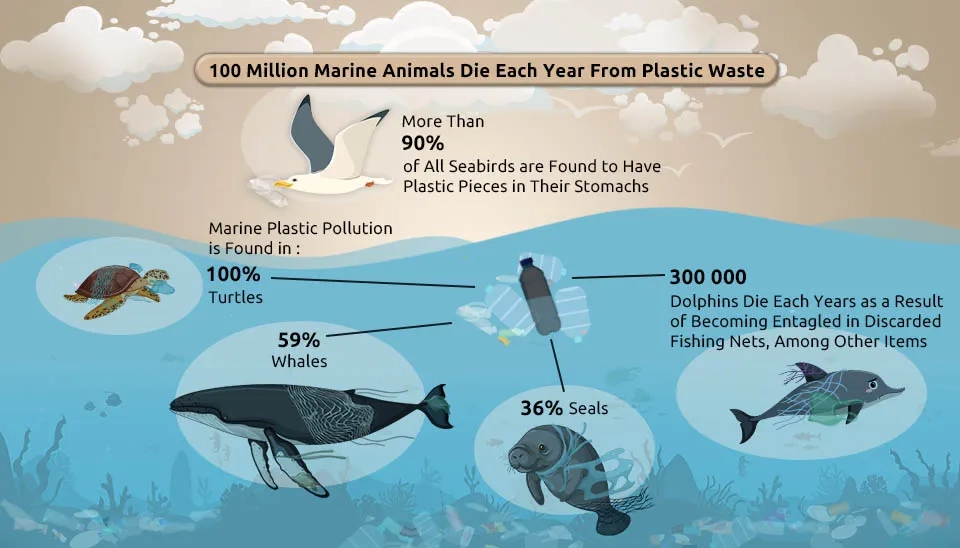
Fig. 7. Statistics detailing the severe impact of plastic waste on marine animals, including whales, seals, turtles, and dolphins.
Seabirds are at risk due to the possibility of ingesting plastic pollutants, especially since half of seabird species are in danger of extinction. Evidence shows that chemicals and toxic plastic pollutants can be transferred to the bodies of seabirds and cause death and disruption of their reproduction. However, it has been estimated that 75% of plastic ingestion by seabirds can be predicted through ecological information and exposure to seabirds. Ingestion of plastic pollutants by seabirds causes a decrease in their body mass and is also effective in reducing the survival of juvenile seabirds (Wilcox et al., 2015).
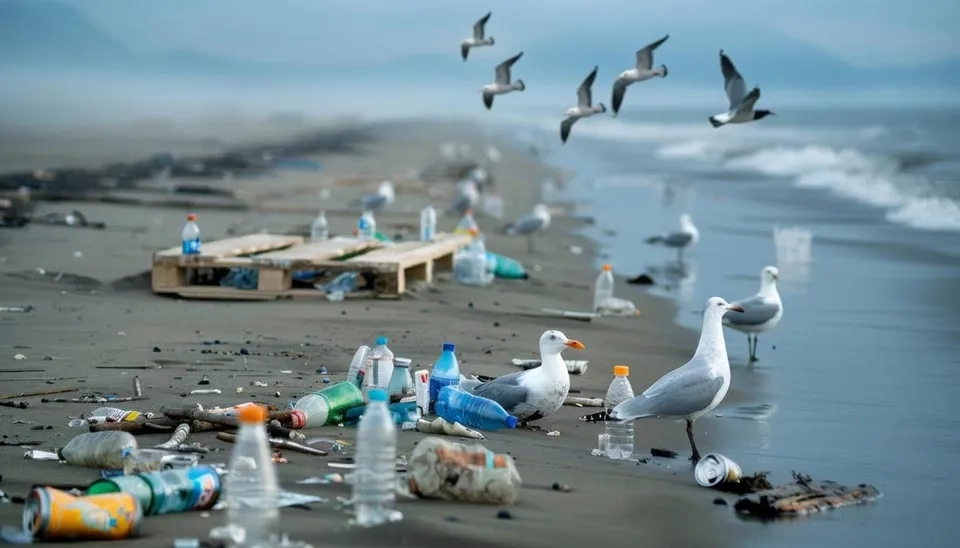
Fig. 8. The visible impact of plastic pollution on bird habitats, showing gulls walking among bottles and cans.
One of the effects of plastic pollution in oceans and seas is on marine turtles. Marine turtles are at risk of plastic pollution due to their migratory behavior and their sensitivity to stressful factors. Marine turtles mostly ingest or become entangled in plastic pollutants and suffer from intestinal blockage and internal injury, dietary dilution, and malnutrition. Reduced immune systems, reduced reproduction, reduced growth rate, and death are the consequences of marine turtles being exposed to plastic. It is also possible that marine turtles get stuck in the plastic waste of fishing nets and their defense power decreases. Because marine turtles lay their eggs on the beaches, the release of plastic waste on the beaches is another risk for marine turtles’ eggs. The wide range of threats of plastic pollution on marine turtles has made them more vulnerable to destruction (Nelmas et al., 2015).
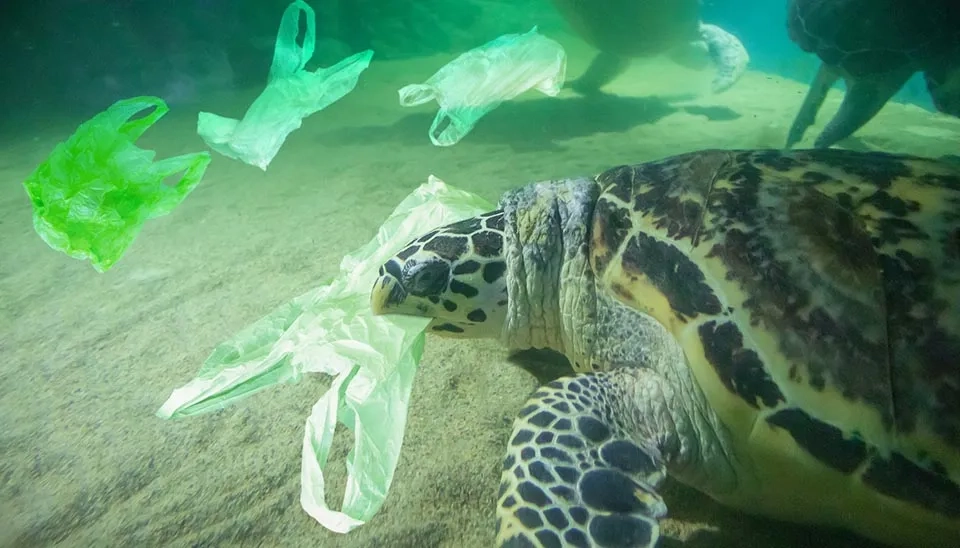
Fig. 9. Underwater view of plastic ingestion by sea turtles, one of the most visible victims of ocean plastic pollution.
Coral reefs are very important because they provide food for 275 million people, play for tourism, and fishing, and protect the coast. But in recent decades, they have been in danger due to climate change and other human factors. One of the human factors that disrupt the life of coral reefs is the release of plastic pollutants in aquatic environments. So plastic materials get caught in coral reefs (especially in spikey coral species) and by covering them, the probability of disease in coral reefs increases 20 times. In addition, plastic pollutants prevent light from reaching coral reefs, and by releasing toxins and anoxia, they provide the opportunity for pathogens to invade coral reefs (Lamb et al., 2018).
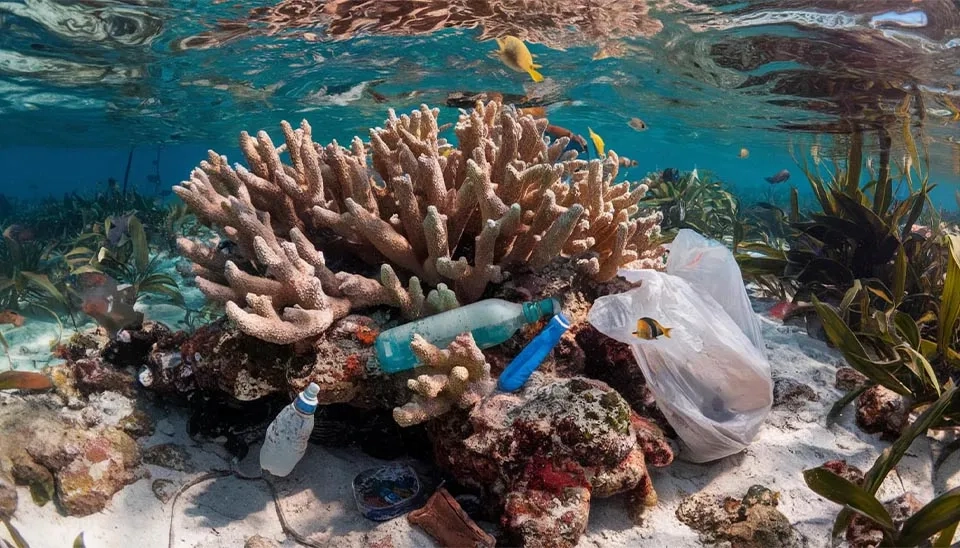
Fig. 10. Underwater scene of a vibrant reef damaged by plastic waste, illustrating the pervasive nature of marine litter.
Plastic pollution, especially microplastics, is increasingly spread in seafood and increases in water and human food, which affects human health due to the toxicity of their structures and natures. Chemical substances in plastic pollutants cause various diseases such as endocrine disorders, cancers, developmental disorders, and reproductive abnormalities in humans, which require control and monitoring of plastic pollution in oceans and seas. The spread of microplastic pollution in oceans and seas and their transfer to marine organisms that are part of the human food chain can be a serious threat to human health, especially children (Rist et al., 2018; Rochman et al., 2015). In addition, the spread of plastic pollution in oceans and seas, especially in coastal areas, reduces recreational opportunities such as swimming, diving, and water sports, and harms the beauty of natural landscapes, which is related to human mental health (Wyles et al., 2014).
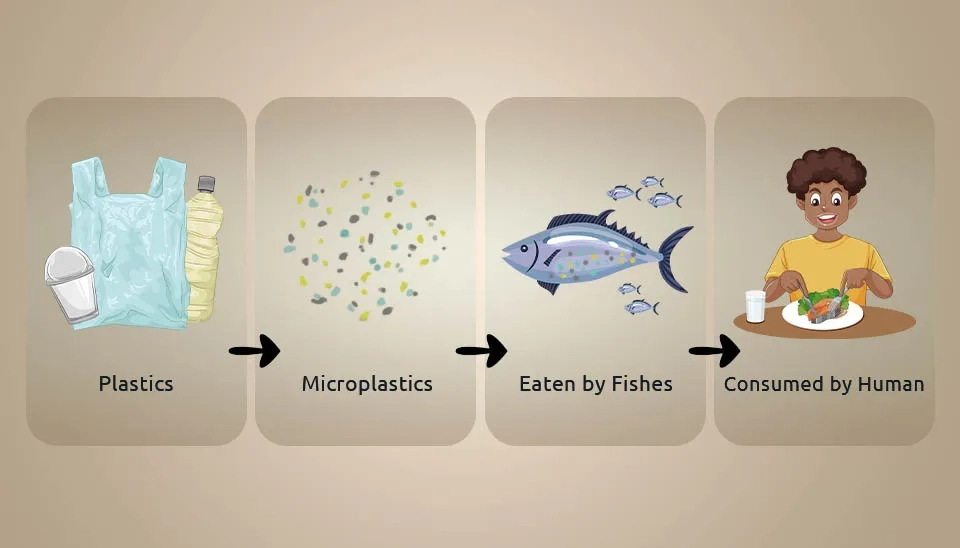
Fig. 11. Lifecycle of plastic waste, illustrating breakdown into Microplastics and the subsequent ingestion by fish and humans.
Plastic pollution in seas and oceans economically affects different aspects of society, especially coastal communities. Economic losses caused by pollution in the seas and oceans can be caused by social and economic costs. The spread of plastic pollution in marine environments has directly and indirectly affected tourism, fisheries, transportation, marine services, and human health, each of which has its economic losses. In general, the accurate evaluation of the economic effects of plastic pollution requires consideration of the quantitative and qualitative characteristics of their pollutants and tracing the route of transmission and emission of pollutants to have a more accurate understanding of its effects by considering the different aspects of societies (Beaumont et al., 2019).
One of the economic effects of plastic pollution in oceans and seas is the impact on marine ecosystem services. Although the economic evaluation of the economic costs of plastic pollution is difficult, by comparing the reduction of terrestrial services affected by human factors, it is estimated that plastic pollution causes a decrease of 1 to 5 percent in marine ecosystem services. On the other hand, the value of marine ecosystem services in the whole world is about 50 trillion dollars per year, which is used to serve the communities. Therefore, it is estimated that a 1 to 5 percent reduction in maritime services will ultimately result in a loss of 0.5 to 2.5 trillion dollars per year. By comparing the amount of pollutants left in the seas and oceans and the resulting economic loss, it is expected that for every one ton of plastic pollution left in the seas and oceans, the value of marine natural capital will be reduced by $3300 to $33,000, which is a significant lost. Is. It is worth mentioning that the amount of economic loss caused by plastic pollution also depends on the type, amount, and size of the pollutant, and in the estimation of economic losses, their spread and displacement and their heterogeneous distribution should also be considered (Costanza et al., 2014; McKinsey, 2015).
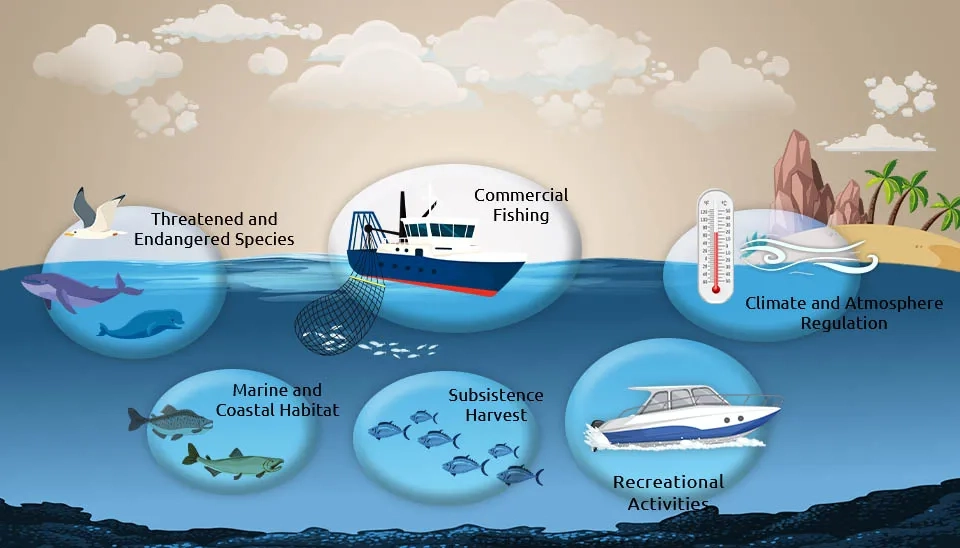
Fig. 12. Diagram illustrating key marine and coastal ecosystem services, including commercial fishing, climate regulation, and recreation.
Plastics are widely produced and utilized due to their stability, durability, and various daily applications. Indiscriminate use of plastics and the lack of proper and efficient management of their waste release a significant amount of plastic pollution in aquatic environments, which is predicted to enter the oceans by about 10 million tons of plastic waste every year. The sources of plastic pollution in the ocean and seas can originate directly from the oceans and seas (as marine-based plastic pollution) or be produced on land and transported to the oceans and seas (as land-based plastic pollution) by mechanisms such as heavy rain, run-off, and storm wind. Various divisions have been presented for the type of plastic pollution, the most common of which is division by size; Microplastics (smaller than 5 mm) and macroplastics (larger than 5 mm). The nature and effects of microplastics and macroplastics are different, but they generally affect human health and marine ecosystems (such as seabirds, turtles, coral reefs, etc.) in which the effects of microplastics in oceans and seas are more common and more acute than macroplastics. Considering the large volume of plastic pollution entering the oceans and seas, and its distribution throughout the oceans and seas, it is important to provide a global framework and countries' adherence to the rules so that by developing and learning new monitoring and control methods, it is possible to prevent plastics from entering the oceans and seas. Achieving this goal requires everyone's efforts and full awareness of all aspects of plastic pollution in oceans and seas.
Keep reading




Comments
No comments yet
Be the first to comment
Share your thoughts and start the conversation.