Water Market Allocation: A Global Guide to Systems and Mechanism
Turning Scarcity into Opportunity: Where Economic Value Meets Every Drop of Life.
SSina
· 30 min read· 76 views
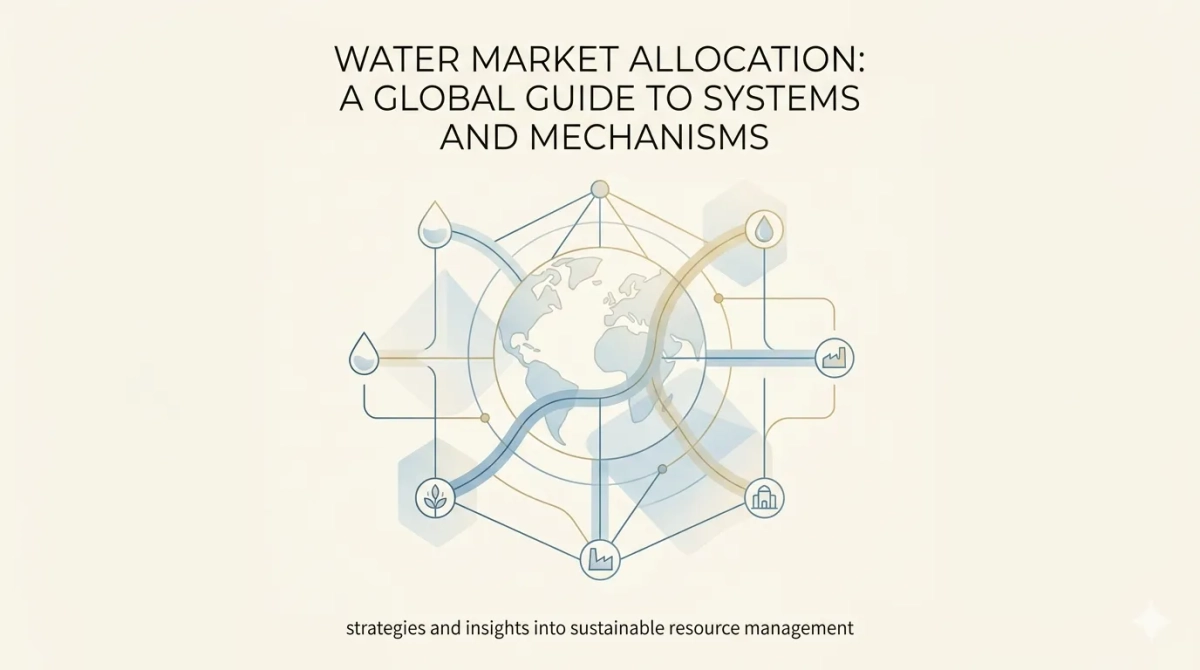
Turning Scarcity into Opportunity: Where Economic Value Meets Every Drop of Life.
Quick answers to common questions.
In 2020-2021, in Australia, with the increase in rainfall that improved access to water, the volume of water allocation traded reached an unprecedented figure of 7991 GL, which led to a financial turnover (monetary value of water traded) of 6 billion dollars (Australian Water Markets Reports, 2021).
Water demands have changed as expanding population growth, changes in agriculture, and increasing concern for the environment compete for water. Under these circumstances, since at least the 1980s, water resource planners in many parts of the world have come to a common understanding that relying solely on policies to enhance water supply is no longer able to bridge expected gaps between supply and demand. This realization has prompted a turn to other approaches, including water demand management, integrated resource planning, and the search for greater flexibility. Water markets based on transferable water rights as one of the water demand management approaches have been advanced as a solution to these problems (Bakker, 2014).
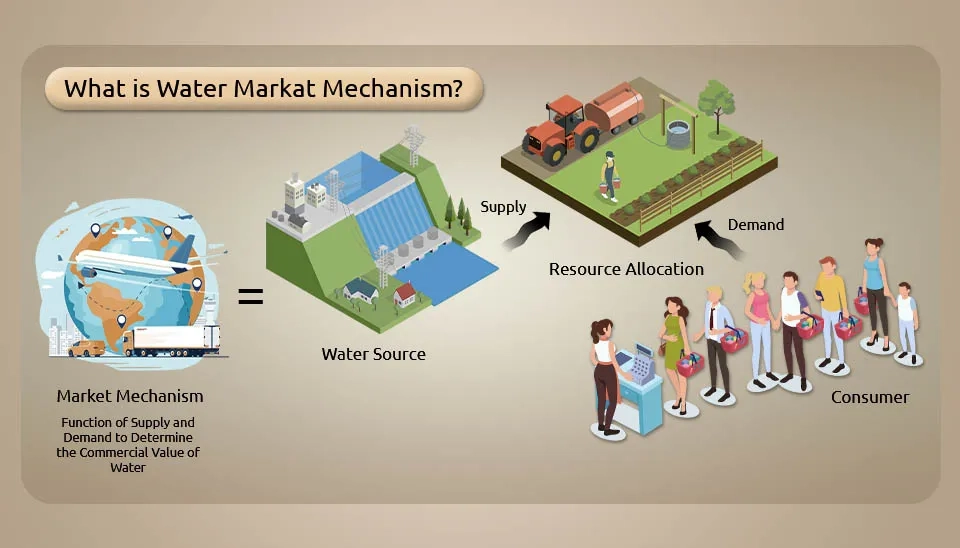
One response to growing demands for limited supplies of water is to reallocate available supplies through market-based allocation strategies. Water markets are an economic tool for allocating scarce water resources productively. A water market allocation is defined as a set of institutional mechanisms that enable the purchase and sale of water rights (for extraction and use). A water transfer is a voluntary agreement between buyers and sellers that results in a temporary or permanent change in the type, time, or place of water use and/or rights. This way, water can be transferred between agricultural, urban, industrial, and environmental uses. So, in principle, both the buyer and the seller can mutually benefit from the transfer. The water market provides water supply for uses where the economic value of water is high, rather than developing new sources of supply (Theesfeld, 2009).
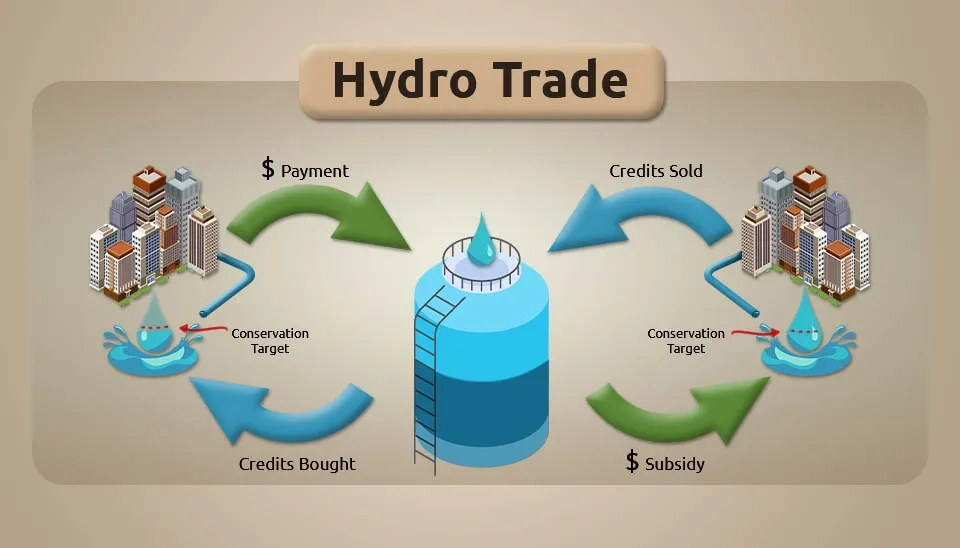
According to the approach for allocating water markets in different regions, it is necessary to define a set of conditions and requirements to establish it. We form the water market by using a specific framework and imposing certain requirements. It should be noted that in the management of the water market, the government must play an effective role as an enabler and potentially a regulator.
In water market allocation worldwide, the establishment of water markets requires two main conditions: water shortage and a viable bargaining "space" (i.e., the presence of potential buyers whose maximum willingness to pay is greater than the minimum willingness to accept potential sellers). For example, in a scenario where high-value urban and industrial users have a high water demand, agricultural sellers have lower commercial returns. Meeting such increasing demand becomes problematic when supply constraints exist; therefore, when there is a shortage of water to meet demands, water transfers can help meet demand by moving water from lower economic value uses to higher economic value uses (Debaere et al., 2014).

According to the experiences observed in different parts of the world, trading water along with land is one of the constraints to strengthening the expanding water market system. These experiences show that one of the most important steps to strengthen the water market allocation is the separation of water entitlements from land. Separation of water ownership from land is deemed to facilitate trade in the water market (Endo et al., 2018). The separation of land from water allowed for new water trade participants, namely, environmental groups; non-landholder financial investors (e.g., superannuation companies and trade speculators); urban water authorities; and industry (e.g., manufacturing or mining industries) (Wheeler, 2022).
Each water right should have a clearly defined amount of water based on the specific unit, type of consumption, and point of delivery. All water markets worldwide demonstrate that defining the water right precisely is necessary to facilitate trade and increase market efficiency. Therefore, one of the most important factors in establishing a water market is defining the water right precisely (Libecap, 2011).

Each water market system has different criteria for the initial allocation of water rights, some of which are influenced by the culture and structure of those contexts. The initial allocation of water rights is the first step in the construction of a water rights system and the key measure to carry out water rights trade and give play to the function of the optimal market allocation mechanism.
To allocate initial water rights, we must consider (1) how much of the water volume can be allocated, (2) who should receive water rights, and (3) how to allocate, that is to say, what are the allocation principles (Wang et al., 2020).
Transaction costs refer to the costs of information gathering, negotiation, brokerage, purchasing, finding trading partners, government review and hearings, application filing, public notification, monitoring, and enforcement, as well as externalities of transfers (Womble and Hanemann, 2020). Where all other factors are equal, transaction costs tend to result in a reduction of trade because they lower the net gains from water transactions, which can be significant. Transaction costs can either be fixed per transaction (which may be the case with legal or administrative fees) or can be relative to the quantity of water traded (as in the case of commission paid to an intermediary). Transaction costs can thus constrain the viability of market mechanisms, potentially making some water market allocations ineffective. Transaction costs are divided into four categories (Erfani et al., 2014):
Establishment of the system, including making legal changes and infrastructure design costs.
Pre-trade costs of information gathering about quantity and quality and helping match buyers and sellers.
Professional and legal contract costs
The cost of system administration includes monitoring and dispute resolution.
Transaction costs are the primary factors affecting water market efficiency. Generally, keeping transaction costs low tends to facilitate trade, thus capturing the gains from trade and increasing market efficiency.
Trading cannot take place without the ability to transport water or transfer the source of extraction. The existence of appropriate physical infrastructure, such as canals, as well as reservoirs and irrigation networks, will improve the performance of the water market allocation and its efficiency and development. It is not possible to form a strong and active water market without access to surplus water in a basin; thus, the completion and improvement of irrigation networks should lead to capacity in the water market (Sun et al., 2022).
Development of physical infrastructure dates back to at least 2400 BCE, when Ancient Egypt diverted water from the Nile River to South Ethiopia for irrigation and navigation purposes (Karandish et al., 2021).
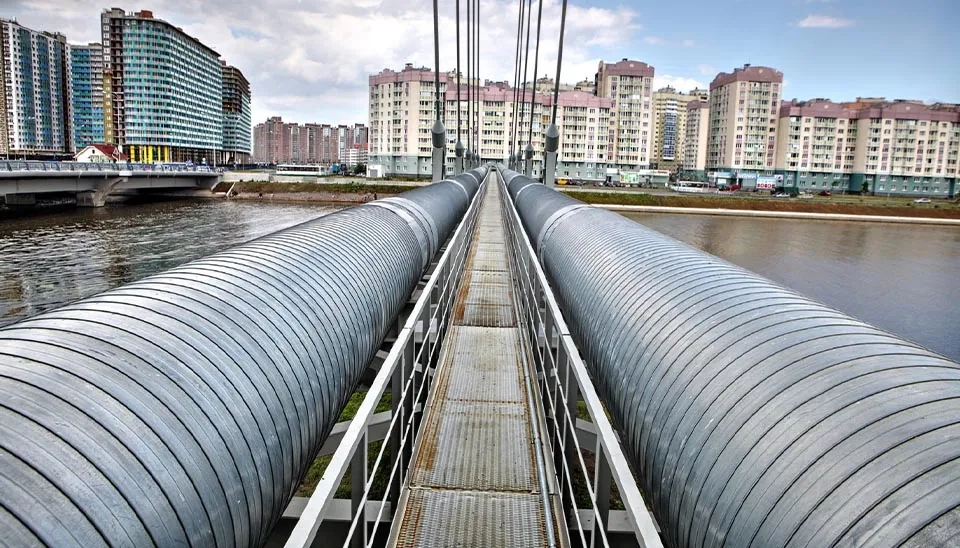
Lack of water market monitoring can lead to the rights of others being reduced, groundwater depletion and contamination, and wastewater (including urban and industrial wastewater, which can lead to the destruction of public and private rights). These potential consequences of utilization make it necessary to monitor water rights and consumption. Enacting laws, establishing executive bodies, forming local courts, and enforcing water rights will also facilitate this monitoring. Therefore, the executive bodies, which, in addition to monitoring the water market, are responsible for water management, maintaining construction of transmission facilities, exchanging of information, ensuring exchange and resolving disputes, and reducing negative externalities are also important pillars of the water market (Breviglieri et al., 2018).
Water resources studies for each catchment to quantify and establish water resource balances and record information about water use from surface water and groundwater are required for further information for regulators, supervisory bodies, water rights holders, and water users. A complete, transparent, and accessible information system from these data helps facilitate water market interactions. Hydrologists, engineers, and systems modelers assess the potential for markets in the context of different water management problems (Garrick et al., 2023).
2.8. External Effects
Externality is any effect on people not involved in a particular transaction. Water rights transfers generally have the potential to affect more than just the two parties involved. Non-exclusivity of the water causes interaction and dependence among users. A water transfer from one location to another affects other water users by changing water quality, flow volumes, or the timing of the flows. In local water markets, due to the limited scope of the market, the problem of negative externalities is less likely to occur, but in large markets, there is a wide range of potential negative effects, like third-party effects or environmental impacts. There is a need for specific rules and regulations to reduce these consequences. Trade may also lead to adverse social or equity impacts in some areas (for example, the reduced viability of agricultural communities and the increase in unemployment resulting from the transfer of water from agriculture to industry or urban use), so all of these should be taken into account (Garrick et al., 2022).

The first consideration when setting up a water market allocation is whether the market has a formal or informal structure. The distinction between formal and informal markets is important and has implications for the use of water markets in developing countries with weak institutional capacities. So, water markets can be divided into two categories: formal and informal.
Formal water markets are those markets in which tradable water rights are introduced through government policy, and the facilities and infrastructure required for its implementation are provided by the government. Usually, a government agency is responsible for oversight, and all transactions are recorded by official authorities. The formal trade of water thus has various benefits, including that it can help ensure that water-use costs (and its opportunity costs) are explicitly accounted for by water users (Wheeler et al., 2017). Various countries and regions have formalized legal, transferable water rights to better capture the benefits of informal trades that were happening. By moving out of this informal and possibly illegal status, “the potential to sell water rights makes them more valuable and provides an incentive for conserving water and reallocating it to higher-value uses. Notably, tradable water rights can also comprise water leasing (for example, for one season), sometimes referred to as spot sales, and indeed can facilitate such transactions (Thobani, 1997).
Informal water markets are those where water rights are exchanged without government intervention or formal registration. Although these markets are technically illegal, governments often overlook them due to their ability to quickly and voluntarily reallocate water. In these markets, users contract for water on their own. In a typical transaction, a farmer sells a specified volume of their surplus groundwater or surface water for a season or a specified period to a neighboring farmer, or several farmers collectively sell some of their water to a nearby town. Informal water markets are not governed by formal rules, and they are prevalent in many countries, where farmers participate in informal groundwater markets (Easter et al., 1999).
Studies show that some countries have taken appropriate and significant measures to establish markets and strengthen their forces. This section describes the process of forming and developing two of the most famous water markets in the world.
Australia, particularly the Murray–Darling Basin (MDB), has the most mature and adopted water market allocation globally. Water trading is an important policy tool to deal with water scarcity issues, demonstrating allocative, dynamic, and productive efficiency benefits.
In the 1980s, as water resources became scarce, water authorities set up a committee to come up with a new strategy for the optimal allocation of available resources, which eventually proposed establishing water markets to increase water use efficiency. This goal led to the establishment of water markets in the states of South Australia in 1982, New South Wales and Queensland in 1989, and Victoria in 1991 (Hadjigeorgalis, 2009). To allow the market to function effectively, the Australian government made institutional changes. The government realized the need to enhance water rights records. There was evidence of drawing down aquifers, so they started licensing groundwater as well as surface water, and they implemented rules requiring the two to be managed in conjunction. The Australian states are relatively independent, so Australia worked to also allow trade between states.
Traders must give notice of the traded prices. Regulators may restrict trade due to physical constraints, hydrological conditions, and the need to protect the environment. Private brokers trade via the Internet. The Australian Government publishes significant information about water trading online.
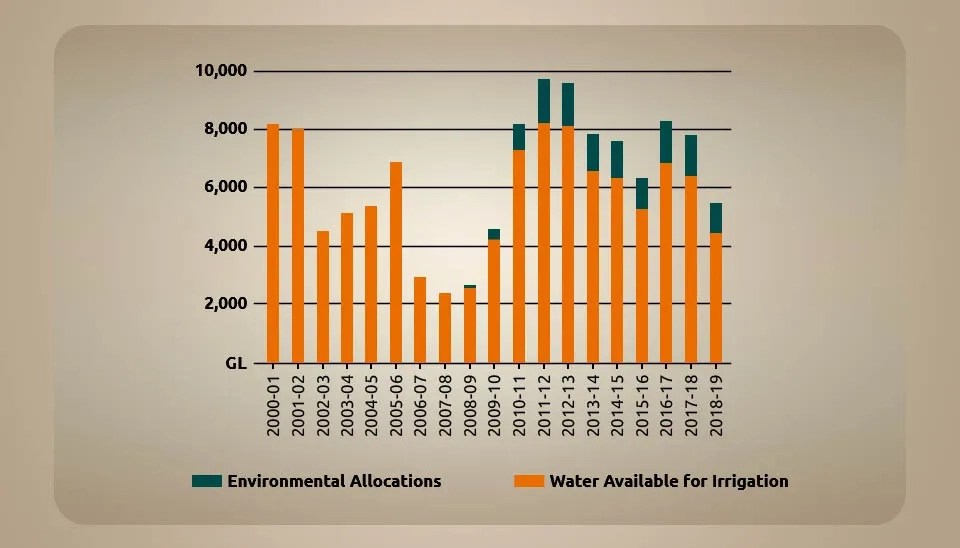
During 2020–2021, 7991 GL were traded across Australia, with surface water accounting for about 98% of trade allocations. Also, out of 7991 GL volumes of water traded across Australia, 7789 GL volumes were from the Murray-Darling Basin. Similarly, most of the allocation trades within the Murray-Darling Basin are attributed to surface water, with only 2 percent of the basin's allocation trades in 2020–21 related to groundwater (Australian Water Markets Reports, 2021).
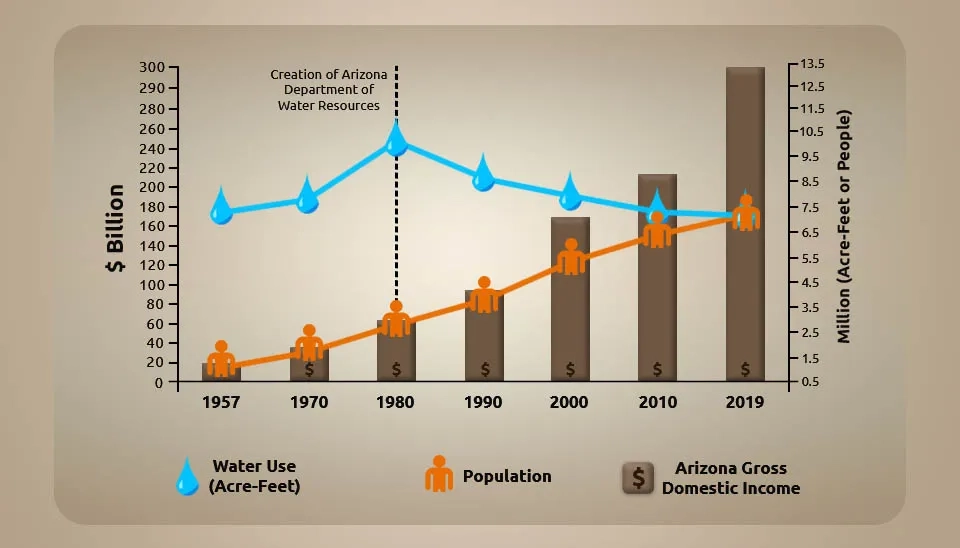
Water markets of numerous varying details (e.g., for both permanent sales and temporary leases) are commonly found in the western United States (US), and in some cases, have existed for many decades. The magnitude of transaction costs, and the locus of who bears them, can vary greatly across states. Here we examine the Arizona water market, which is one of the most famous water markets in the United States.
Arizona has an active water market. From 2009 to 2018, an average of 151,000 acre-feet of water was traded annually. The market's overall trade volume has grown seven times since 2009, and this trend has been noticeable since 2012. In terms of types of trades, 92% of the water trades were in the form of leases, while only a small volume (~8%) was in the form of permanent sales. It should be noted that in 2018, approximately 20% of the total water supply was through water trading. In 2018, more than 375,000 acre-feet of water traded through leases and sales had a total market value of $138 million. The price for permanent deal water averaged about $2,046/acre-feet, while the price for temporary sale averaged nearly $130/acre-feet. As a result, the lease price was about 6% of the selling price (Schwabe et al., 2020).
Water use on a global scale is outpacing population growth, and the productive use to which water is being put is shifting from agriculture to municipal, industrial, and energy use. Construction of new dams and large-scale diversion projects as supply approaches are expensive measures to meet these growing and changing needs. Therefore, as regions increasingly struggle with water scarcity, the world must implement water demand-management strategies instead of a water supply approach. One possible strategy includes the establishment of water entitlement and water allocation systems that make water trading possible. Water market allocation was introduced as one approach to adding flexibility to a regional system. Water market allocation provides benefits by facilitating voluntary transfers among users and encouraging flexible water management (e.g., for dealing with drought or changing preferences and circumstances). However, setting up a market-based allocation can have many environmental, social, economic, and legal complexities that can be managed by creating laws or institutional arrangements that regulate water markets. Successfully establishing a functioning water market needs to be based on specific regional characteristics. Finally, the evidence indicates that appropriately designed water markets, supported by sound institutions, are an effective mechanism for reallocating scarce water among sectors. Carefully designed water markets make it possible to meet the growing urban and industrial water demands without derailing growth in crop production. Market transfers among sectors may make it possible to significantly scale back investments in new water supply projects.
Keep reading












Comments
No comments yet
Be the first to comment
Share your thoughts and start the conversation.