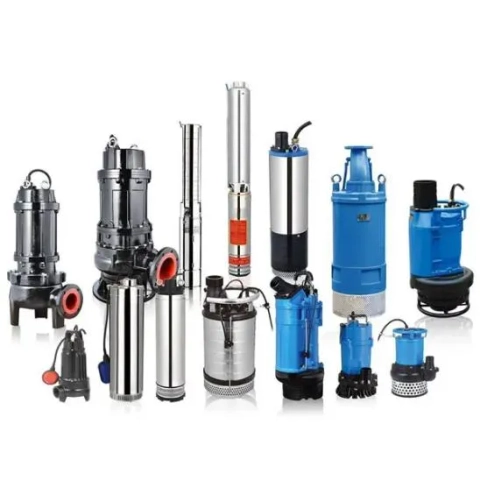
Submersible Pump
Red Wave Submersible Pump
New

Company ratings are shown as stars out of 5, from Waterlyst users’ ratings plus any published ratings linked here. Products and services use a separate out-of-10 scale.
Abu Dhabi, United Arab EmiratesIn the broader landscape of fluid management, a sump pump represents the lightest duty option, designed exclusively to manage clear groundwater or minor drainage. Typically installed in basements or low-lying structural basins, these systems prevent flooding by collecting and removing clear water containing only microscopic particles like sand or fine silt. Because they lack heavy-duty components or wide internal clearances, attempting to run thick mixtures or large debris through a standard sump pump will instantly clog the mechanism and burn out the motor. Stepping up in durability, a sewage pump is specifically engineered to transport raw wastewater from residential and commercial buildings directly into septic systems or municipal sewer lines. These systems are uniquely built to handle large volumes of liquid mixed with soft organic solids and flushable waste. To achieve this without bottlenecking the plumbing, sewage pumps utilize specialized impellers or internal grinding mechanisms to tear down and break apart soft materials, allowing the waste stream to flow smoothly through standard pipelines. At the most rugged end of the spectrum sits the sludge pump, a heavy-duty industrial workhorse designed to handle highly viscous, thick, and intensely abrasive mixtures. Unlike sewage pumps that handle soft organic waste, a sludge pump thrives in construction, mining, and heavy industrial environments where fluids are packed with thick mud, gravel, grit, and dense sediment. Built with highly durable, wear-resistant metals, these robust machines possess the raw mechanical power required to push dense, slurry-like weight without wearing down from the constant friction of rocky materials.