Have you ever considered a world where the smallest component achieves the greatest feats? Imagine a world in which sound waves could be precisely controlled at the nanoscale and even change industries, such as medicine and communications. Would you like to learn more about this advantage? Investigate and discuss this exciting field in more detail: Some of the important challenges faced in water and wastewater treatment have some issues, such as not being long-term usage, high cost, possible risk to human health, environment, and technical difficulties (Qu et al., 2013). Sokolov in 1949 developed the acoustic microscopy idea for the first time. Carbon nanotubes (CNTs) have generated lots of interest in the nanotechnology research community due to their exceptional mechanical strength and unique electrical properties (Baughman et al., 2002).
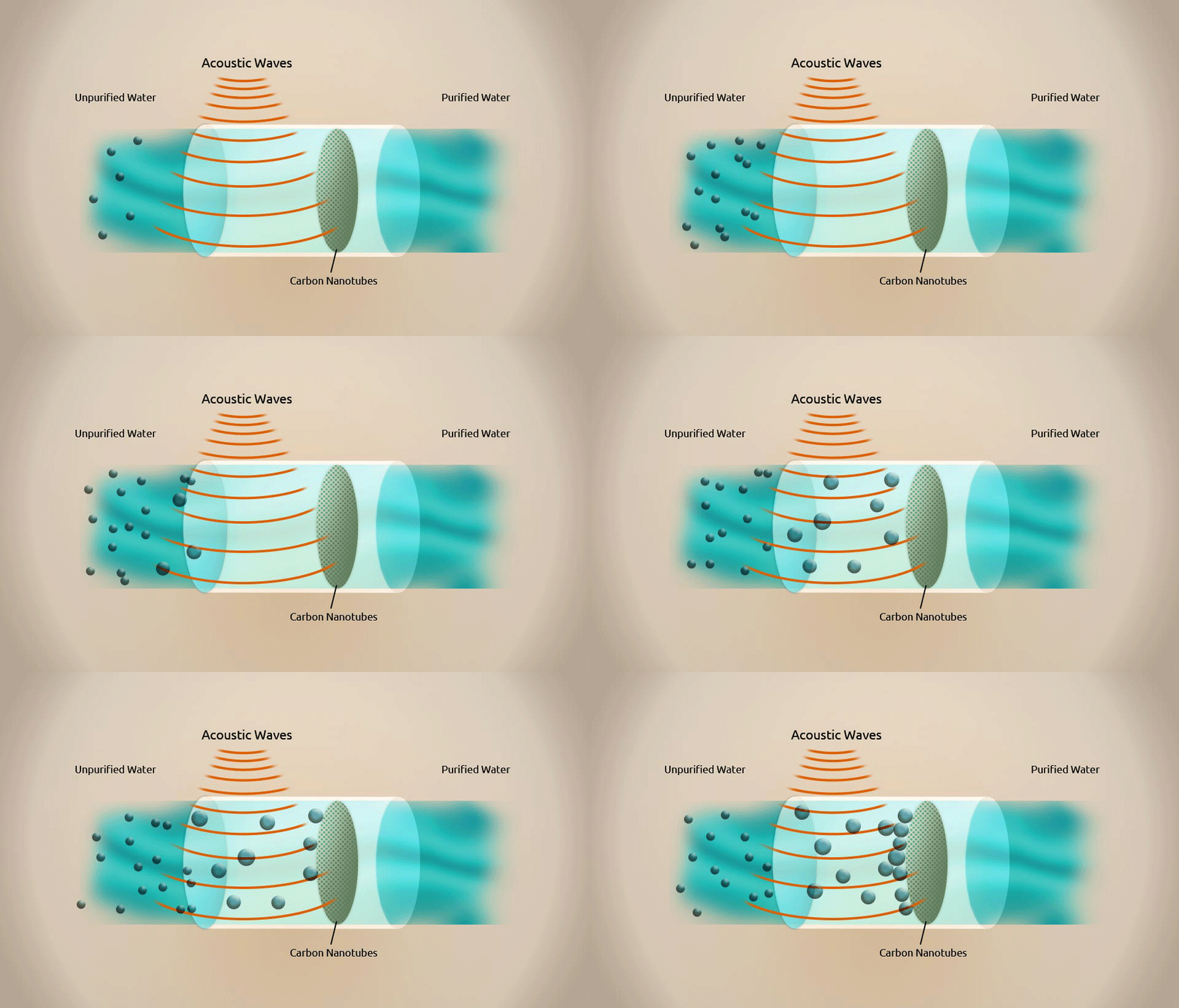
Fig. 1. The mechanism of Acoustic Nanotube Technology, showing acoustic waves propelling water through a carbon nanotube filter.
Nowadays, the scientific society has found many limitations in common methods of water treatment technology, such as distillation, which needs high energy and water. Moreover, removing the pollutants from water is more difficult at boiling point. In the table below, these methods are compared and discussed briefly:
Table. 1. The limitation of common water treatment techniques (Khan et al., 2019)
Treatment Type | Limitation |
Distillation | High water and energy requirements Difficult to remove pollutant boiling point above 100°C |
Biological Treatment | Microorganism are expensive, labor-intensive and hard control; their substances ruin the cells |
Ultraviolet Treatment | It is disabled because of fluidity, costly And ineffectual due to heavy metal Poor at removing inorganic pollutants |
Ultrafiltration | Tough to clean Needs a lot of energy Weak ability in dissolved inorganic elimination |
Chemical Transformation | Poor quality combination Excessive reagents required Inactive undesirable circumstance Restricted method |
Coagulation and Flocculation | Dependent on PH Insufficient performance |
Considering the above table, researchers in the water treatment industry turned to nanomaterials and nanotechnology due to more efficiency and better settlement, such as nanoadsorbents, which have a high specific surface, whereas their production is too expensive. The table below discusses the entire category of methodologies in wastewater, outlining their advantages, disadvantages, and associated appliances.
Table. 2. Water and Wastewater Nanomaterial Type Overview (Gehrke et al., 2015)
Nanomaterial | Advantages | Disadvantages | Applications |
Nanoadsorbent | High specific surface More absorption rate Small footprint
| Expensive production | Heavy metals, organics and bacteria removal Point of use
|
Nanometal and Nanometal Oxide | Photocatalystst (TiO₂, WO₃) Magnetic High erosion barrier Short, flexible interparticular diffusion distance
| Less reusable | Eliminate of radionuclides and heavy metals (arsenic), media filters, slurry reactors, pellets and powders |
Membranes and membrane process | Reliable, largely automated process | High energy requirement | Total water and water waste treatment field |
Download table of Water and Wastewater Nanomaterial Type Overview
Nanotechnology is an innovative and the most important method in water treatment processes; however, the nanomaterial and its application are improving day by day. Furthermore, previous nano methods (according to the above table) depicted substantial weaknesses and limitations, and finally scientists came up with a new method. One of the newest and most advantageous techniques is “acoustic nanotechnology." Previous limitations have been removed in this method, which is completely described in this paper along with its definition, benefits, and application:
Johnson Space Center at NASA has just developed a new technique to produce a filter
that can remove pollution from water sources. This invention was created to clean the wastewater for reuse on board the international space station, whereas it can be used in various situations on Earth when suitable medical-grade water is required. The special feature about technology is that it uses acoustics to move water through small-diameter carbon nanotubes instead of pressure (NASA).
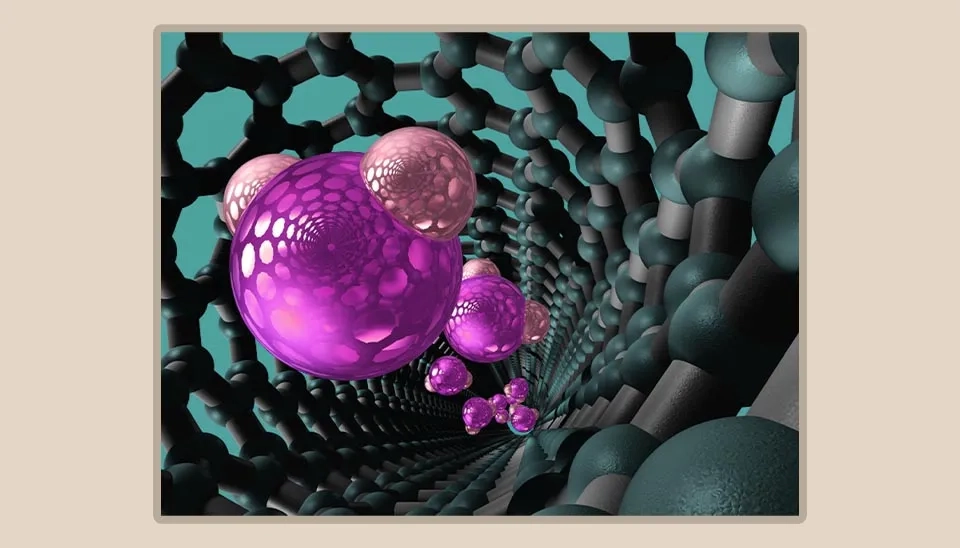
Fig. 2. Molecular filtration inside a carbon nanotube, illustrating how water molecules pass through while larger impurities are blocked.
Ultrasound refers to sound waves with frequencies higher than 20 kHz, which exceed the range of human hearing. These waves are produced using a device called a transducer, which is designed to convert electrical energy, or in some cases other forms of energy, into acoustic energy at high frequencies. The process involves the application of an alternating electrical current to piezoelectric materials within the transducer. These materials deform rapidly under the influence of the current, generating high-frequency vibrations that produce ultrasound waves (Asher, 1997). The concept of “acoustic technology” describes the application of acoustic microscopy methods in the nursing and health professions to measure the anisotropy and depth of thin films, discover inhomogeneities, and characterize the microstructures (Arnold, 2001).
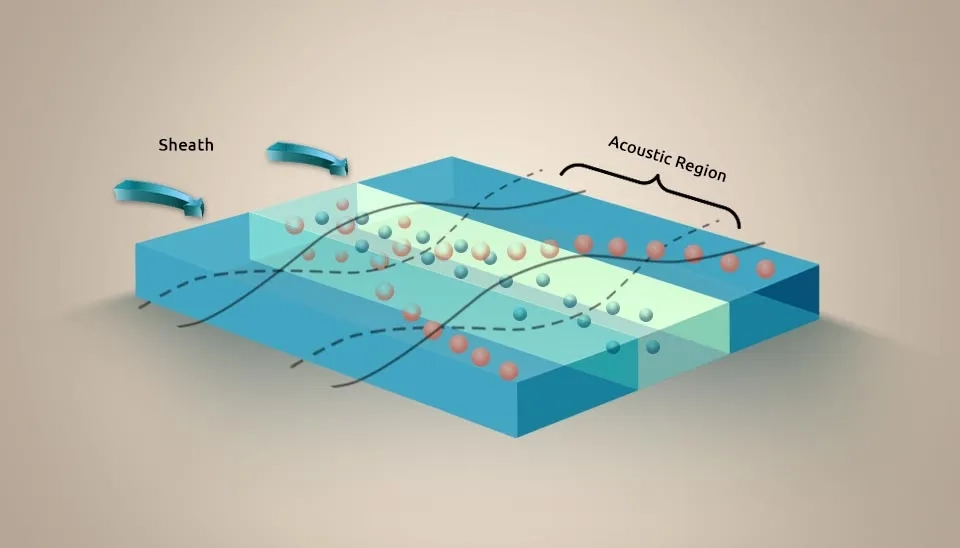
Fig. 3. The Acoustic Region of a device, showing sound waves manipulating particles (red and blue spheres) using an acoustic field.
Ultrasound’s basic aim is to destroy both of the bacterial cells and organic materials, which are difficult to break down (Fetyan and Attia, 2020).
A Carbon Nanotube (CNT) is a carbon tube that has a nanometer diameter and a high ratio of length to diameter. The nanotubes have one to hundreds of concentric carbon shells approximately 0.34 nm apart from the next shells (Popove, 2004).
By rolling up a sheet of graphene, a single-wall carbon nanotube can be considered as a one-dimensional structure (Zhang et al., 2022).
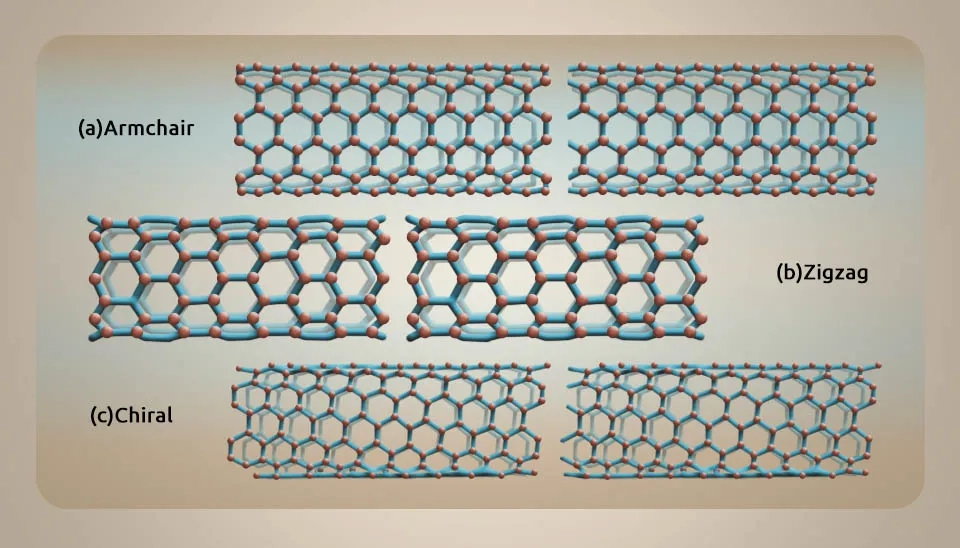
Fig. 4. Carbon Nanotubes (CNTs) structured as armchair, zigzag, and chiral forms.
According to the above figure, zigzag and armchair forms describe the hexagon pattern around the perimeter. In chiral form, the hexagon is placed helically around the tube axis (Harris, 2004). Carbon nanotubes (CNTs) utilize thermoacoustics to produce smooth-spectra sound emission across the range of 1-105 Hz (Aliev et al., 2013).
The technology is designed for a range of water processing requirements and uses less power than traditional filtering methods.
small-diameter Carbon nanotubes and acoustics work together in this method to make clean and contaminant-free water effectively. Additionally, by using acoustics, this instrument may transport water through without depending on gravity or filter orientation (NASA). Each water supply system faces purifying issues, such as high expenses, effective removal of contaminants, operating issues, and production of secondary harmful chemicals (Gaya and Abdollah, 2008).
Here are some benefits and advantages of acoustic technology through water purification (Mason and Lorimer, 2002):
Low capital costs and an easy, flexible model
Simple modification of a traditional treatment unit
No environmental issues are expected
High performance for the various disease types from water and wastewater inactivity, considering the microorganism form
Oxidation of natural organic compounds
Strong efficiency
The acoustic nanotube technology applies to various branches of water sources and wastewater developments as medical facilities, laboratories, distilleries, semiconductor manufacturing plants, ultrapure water filtration, desalination manufacturers, wastewater treatment facilities, and consumer society.
This technique is used on Earth, where it is necessary to obtain drinkable, medical-grade, or pure water from the contaminated water sources. Additionally, to remove water from chemical products, this technique is an effective way; for instance, it could be used as a supplement in the still places for extracting water from alcohol and alcoholic drinks (Gavalas, NASA).
Abedini Nassab et al. (2022), investigated the acoustic and nanotechnology role in biology and medicine as they examined the nanotechnology application in different acoustic-based bioapplications with an emphasis on current technologies and development. They also examined nanoparticles, nanorods, and nanofilms, demonstrating their impact on fundamental fields such as medicine.
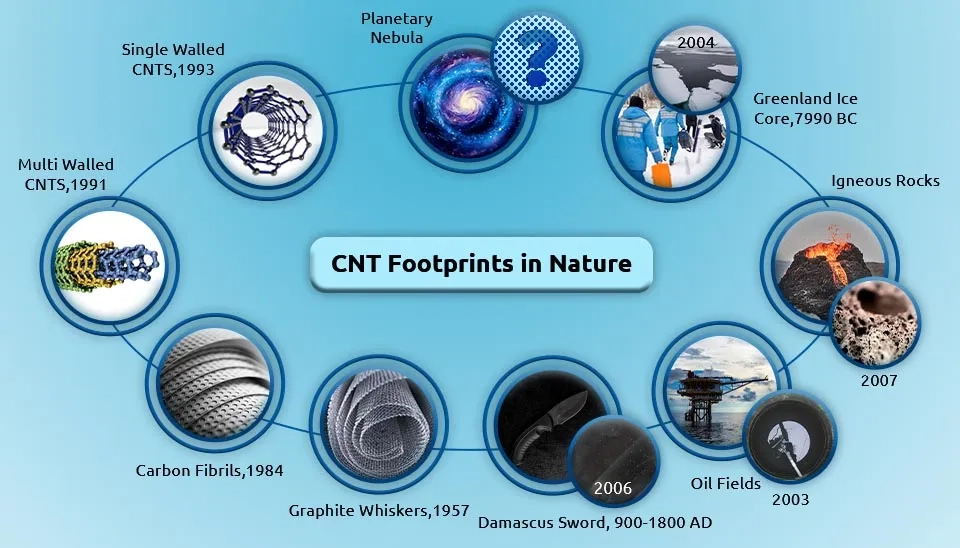
Fig. 5. Timeline of Carbon Nanotube (CNT) findings, showing their existence in natural and historical objects across centuries.
Balakrishnan et al. (2021), studied the multi-walled carbon nanotubes' (MWCNT) effect on the aircraft panels due to their silencing properties, and the result showed that MWCNT covering is a possible passive noise reduction method with a little weight penalty and whereas it plays an important role in the STL (Sound Transmission Loss) feature for airplane panel production due to its thickness and orientation. By creating shock, acoustic cavitation, and heat deposition inside the focal volumes, high-amplitude focused ultrasound may lead to localized disruption in liquid and tissues (Coussios and Roy, 2008).
Sound can be considered mechanical energy that is transmitted by pressure waves in the form of gas, liquid, or solid (Leighton, 1994). Ultrasound transfers energy by moving molecules in the environment where the wave spreads (Bello et al., 2005).
Cavitation bubble implosions often cause hydrodynamic, thermal and even electrostatic effects. Regional pressure increases happen in multiple areas after the fluid has entered an area that achieved critical pressure due to sudden implosions in bubbles and holes that tend to be smaller than a millisecond in time (Gogate, 2007).
Microbial disinfection greatly depends on chemical and thermal reactions. The start of the turbo is the primary process, which has effects on the entire fluid by creating vortexes, shock waves, and high shear stress (Doulah, 1977).
This innovative water filtering system uses the small-diameter carbon nanotubes, which are placed into an acoustically operated molecular filter. Water movement through the filter is controlled with acoustic utility, which makes this filtering system more unique. In order to remove particles from the filter’s inlet and restore the normal system flow rate, a cleaning cycle is initiated by moving the water out of the filter and entering the predefined set point. This filtering system doesn't need to be cleaned compared to the other filtration system (NASA).
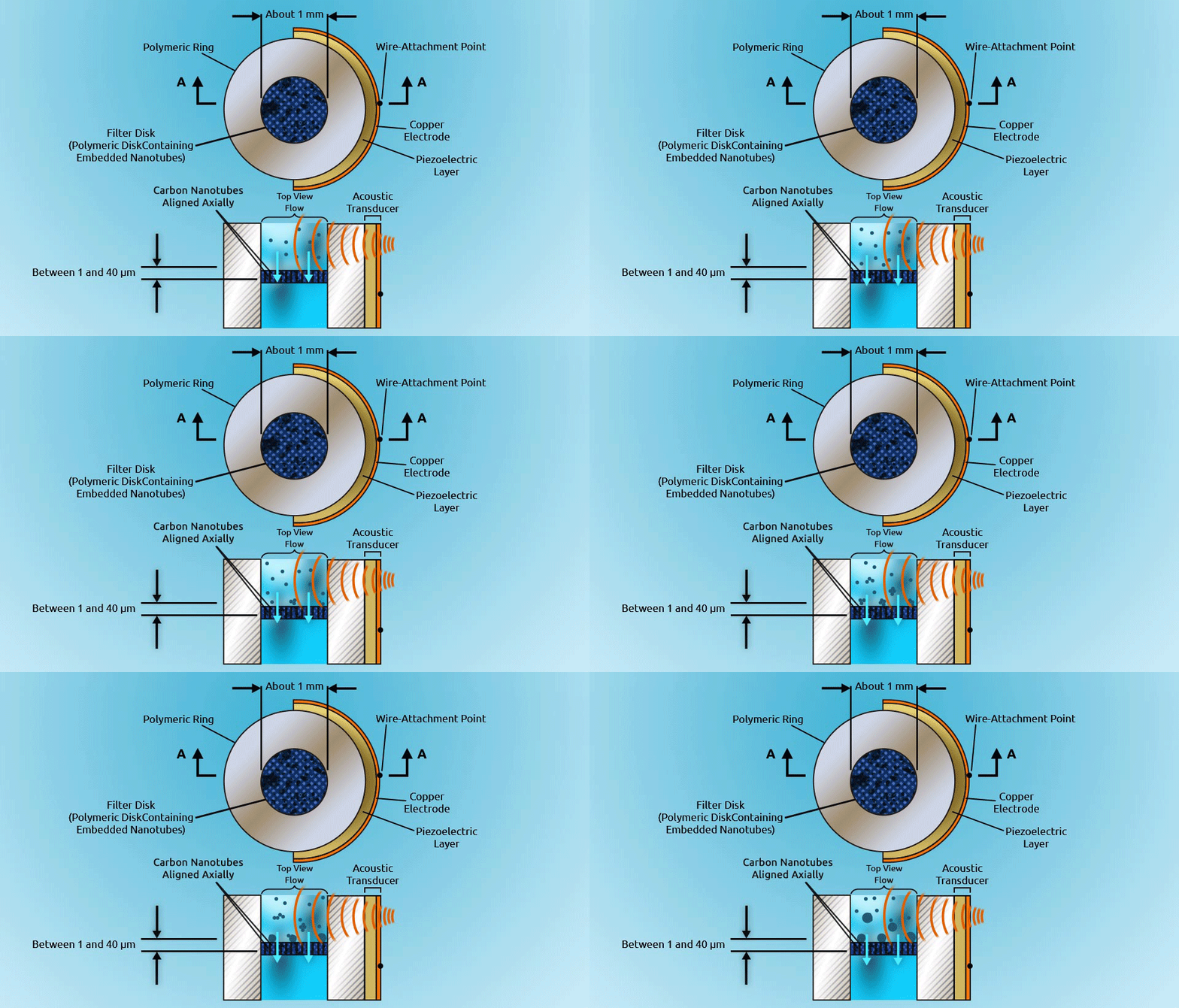
Fig. 6. Diagram of the Acoustic Nanotube Filter Disk and the transducer that generates sound waves for molecular flow.
Water quality refers to the physical, chemical, and microbiological characteristics of water, which help determine the water's acceptance and whether it is safe to drink. On the other hand, we have trouble producing enough drinking water due to the fact that all of the water resources are not suitable for human consumption. With consideration of all of these aspects, finding the best water treatment methods and facilities has major importance. In this study, we evaluated the most recent water treatment technique in terms of acoustic nanotube technology. Finally, taking into account the cost and energy consumption of other methods and technology, acoustic nanotubes have a more valid and effective way over water treatment issues.
In conclusion, acoustic nanotube technology is an incredible advance that could apply in a number of industries, such as communication systems and the medical field. This technology provides new approaches that improve performance, efficiency, and capacities using the special qualities of carbon nanotubes and the accuracy of ultrasonic control.
Do you know any technology that is newer and more effective than what we investigated in this article (acoustic nanotube)? If you know about it or if you have any experience using this new technology, please comment here and share your valuable knowledge with us.








Comments
No comments yet
Be the first to comment
Share your thoughts and start the conversation.